
How Do Praying Mantises Defend Themselves? Defense Mechanisms Explained
Hello, mantis friend. Have you ever spotted a praying mantis perched so motionless it seems to melt into a leaf or twig? That quiet stillness is your first clue to their clever survival arts.
Praying mantises defend themselves through a mix of camouflage, deceptive postures, and swift physical actions. Their strategies are beautifully layered, blending stealth with surprise.
We will explore these methods in depth, starting with a quick overview of their key defenses:
- Camouflage that mimics plants and surroundings.
- Threat displays to startle or intimidate.
- Rapid strikes and escapes when needed.
Camouflage and Crypsis: The Art of Blending In
Praying mantises master the art of invisibility through camouflage, cryptic coloration, and crypsis, allowing them to slip past predators unnoticed. Their ability to mimic their surroundings makes them nearly invisible in their natural habitats, a skill that keeps them safe from birds, reptiles, and other threats. We often see this in pet species like the Ghost Mantis, whose misty brown body and leaflike frills let it disappear among foliage, or the Orchid Mantis, whose soft pink and white petals blend perfectly with flowers. Understanding the role of diet and genetics in praying mantis coloration can provide insights into how these insects achieve such convincing camouflage.
Leaf mimicry involves mantises resembling dried or living leaves, while twig mimicry lets them pose as slender branches. For instance, our Ghost Mantis Luna settles into a motionless pose, her delicate limbs extending like leaf veins to complete the illusion. In captivity, you might notice your mantis adapting its posture or color over time to match its home, a subtle shift that highlights their incredible survival instincts.
- Motionless posturing: They freeze for long periods, reducing detection.
- Habitat adaptation: Mantises may change their resting spots to better blend with enclosure decor.
- Color matching: Some species adjust their hue based on light and surroundings.
- Slow, deliberate movements: This minimizes attention from potential threats.
To support your mantis’s natural camouflage, design an enclosure with live plants, twisted branches, and varied textures that mimic their wild environment. Adding elements like dried leaves or bark provides hiding spots, helping your pet feel secure and reducing stress. Avoid bright, artificial colors that could disrupt their ability to blend in, and ensure the habitat has gentle lighting to encourage their cryptic behaviors. Creating a naturalistic, safe habitat for your praying mantis helps them thrive and express instinctive behaviors. A well-designed enclosure supports long-term health and reduces stress.
Startle Displays and Wing Patterns: Surprising Threats Away
When camouflage isn’t enough, mantises rely on startle displays to shock and deter predators. These sudden actions include wing flashes that reveal bold patterns, eye spots, or vibrant colors, creating a brief moment of confusion that can save their lives. It’s a clever bluff that makes them appear larger and more dangerous, giving them a chance to escape unharmed. Because mantises can see colors, the bold wing patterns and vivid hues in these displays are especially effective. Studies of mantis eyesight show color perception plays a key role in how these startle responses unfold.
Recognizing when your pet mantis is performing a startle display involves watching for specific cues. Follow these steps to spot the signs early and understand your mantis’s stress levels.
- Watch for sudden wing movements: Look for rapid opening or fluttering that exposes hidden markings.
- Note color changes: Observe if wings or body shift to brighter hues or show contrasting patterns.
- Observe body posture shifts: Check for raised forelimbs or a stiffened stance that signals alarm.
This defense mechanism works by startling predators long enough for the mantis to flee or reposition. Pet mantises are most likely to use startle displays when they feel cornered, such as during handling or if something large approaches their enclosure. For example, our Giant Asian Mantis Moss often flares his emerald wings with pale banding when he senses a sudden movement, a vivid reminder of his wild instincts.
Species like the Giant Asian Mantis depend on wing patterns for these displays, using them as a primary line of defense. By learning to read these signals, you can create a calmer environment and build trust with your mantis over time.
Physical Defenses: Forelegs and Bite in Action
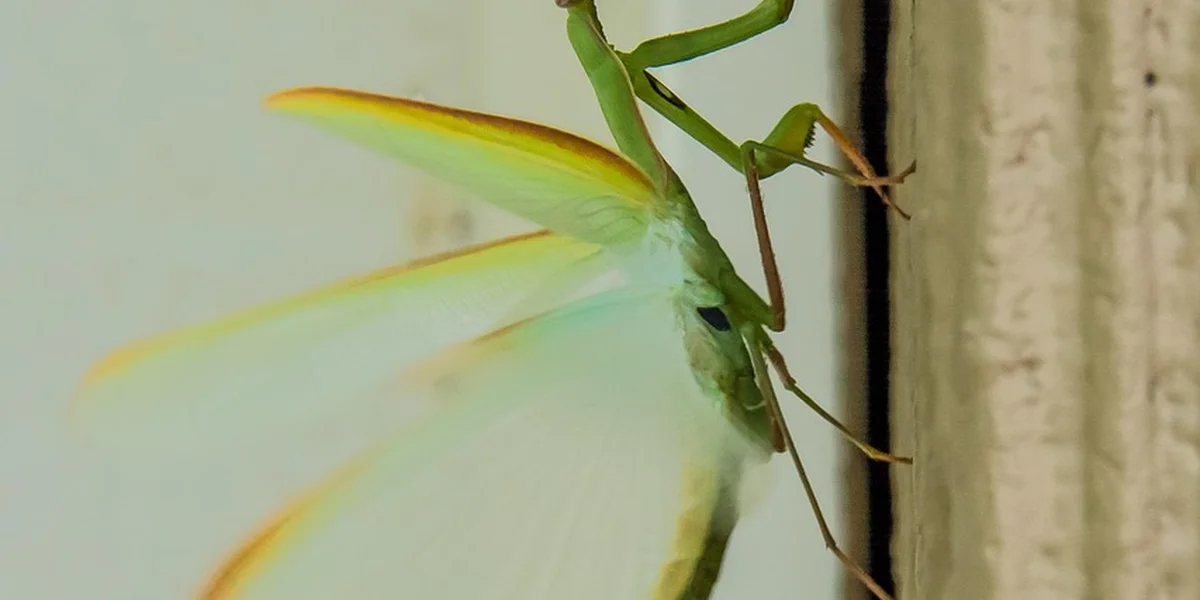
Praying mantises wield their raptorial forelegs like swift, spiny traps, snapping shut on anything that comes too close. These specialized limbs are lined with sharp spines that grip and immobilize threats, making them a mantis’s first line of defense against curious pets or clumsy hands. Are these arms called claws? In scientific terms, they’re raptorial forelegs—not true claws—and their spines grip prey with a grappling-hook-like action. When a mantis feels cornered, it might strike out with lightning speed, aiming to startle or deter rather than cause serious harm.
Biting is another tool in their arsenal, though it’s typically reserved for smaller adversaries. A mantis’s bite can pierce soft skin, but for humans, it often feels like a mild pinch -more surprising than painful. They’re most likely to bite if squeezed or handled roughly, so it’s a reminder to treat them with gentle respect. In humans, bites are rare and usually only a brief, mild pinch.
In a home setting, your pet mantis might resort to physical defenses during routine care moments. We’ve seen this happen when:
- Reaching into the enclosure to adjust decor or clean surfaces.
- Handling them for relocation or health checks.
- Introducing new items that startle them unexpectedly.
To keep interactions calm and safe, move slowly and predictably around your mantis. By allowing them to see your hand approach from the front, you reduce the chance they’ll interpret you as a predator. My Ghost Mantis, Luna, rarely raises her forelegs now that she’s accustomed to my steady movements during misting.
Behavioral Responses: How Mantises React to Danger
When faced with danger, mantises often freeze in place, relying on their camouflage to vanish into the background. This stillness isn’t just passive hiding; it’s a calculated tactic to avoid detection by blending with leaves or twigs. Some species might sway gently, mimicking a breeze-tossed branch to throw off pursuers.
Flight is another escape route, especially for winged adults who can take to the air if startled. In captivity, sudden movements or loud noises can trigger this response, so we keep their environment quiet and consistent to lower stress. You might notice your mantis adopting an “ambush” pose-forelegs raised and ready-if they sense a threat nearby.
Watch for these behavioral adaptations in your pet mantis:
- Seasonal color shifts in species like the Carolina mantis, which may darken or lighten with temperature changes.
- Habitat-specific postures, such as curling abdomens to resemble dead leaves in terrariums with dry foliage.
- Increased hiding or reduced activity during molting periods, when they’re most vulnerable.
I’ve watched Moss, my Giant Asian Mantis, freeze mid-step when a shadow passed over his enclosure. His emerald body became a statue, and only after several quiet minutes did he relax back into his curious exploring. These moments remind us how attuned they are to their surroundings, even in the safety of our homes.
Species Variations in Defense Tactics
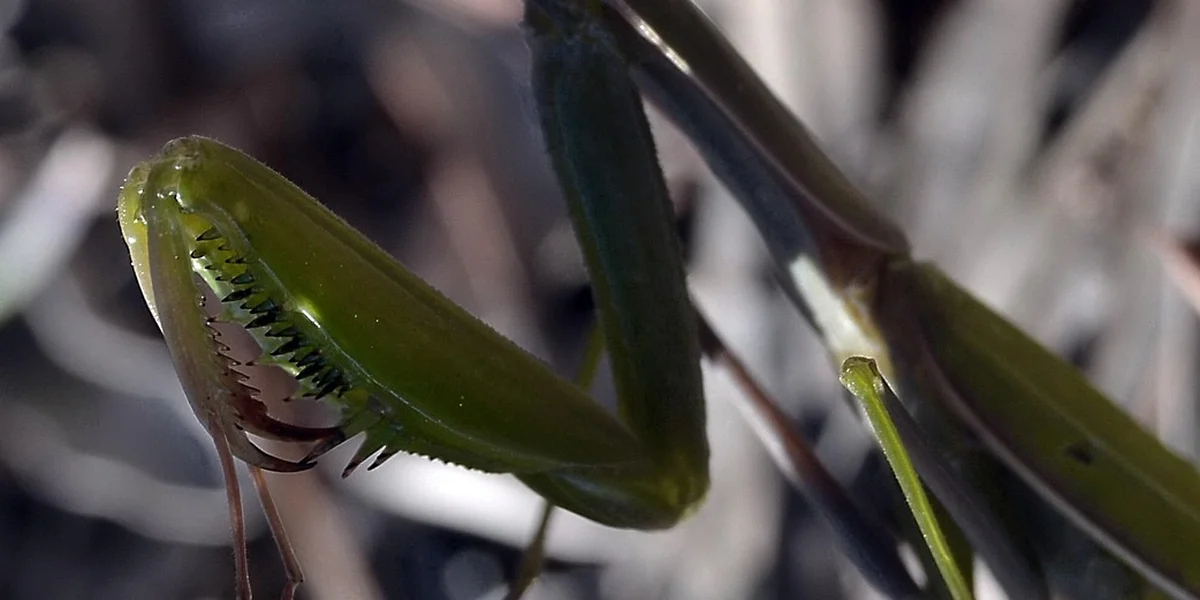
Each mantis species brings its own flair to self-defense, shaped by their unique appearances and habits. Observing these differences helps us appreciate how evolution tailors defense to each mantis’s lifestyle and environment.
Ghost Mantises, like our Luna, often rely on cryptic camouflage that mimics dead leaves or twigs. They curl their bodies and remain perfectly still to avoid detection. Their delicate, leaf-like frills and muted brown coloring make them masters of disguise in dry, foliage-rich settings.
Orchid Mantises, such as Sprig, use floral mimicry to blend into blossoms, employing stillness as their primary shield. When startled, they might flash their vibrant petals or make a quick, darting movement. This species prefers evasion over confrontation, using their stunning looks to become nearly invisible among flowers.
Giant Asian Mantises, like Moss, combine robust physical traits with bold startle displays, often standing tall and spreading their forelegs to appear larger. Their emerald green bodies help them merge with lush greenery, while their stronger build allows for more assertive defensive postures.
| Species | Camouflage | Startle Displays | Physical Defenses |
|---|---|---|---|
| Ghost Mantis | Dead leaf mimicry with frilled edges | Wing flaring, slight hissing sounds | Minimal; relies on escape and hiding |
| Orchid Mantis | Flower petal imitation in pink and white | Sudden color flashes, quick shifts | Delicate; avoids direct contact |
| Giant Asian Mantis | Green foliage blending with banding | Threat postures, rapid leg strikes | Strong forelegs, potential biting |
Species-specific traits, like the Orchid Mantis’s petal-like appendages, mean their defense leans heavily on stealth and surprise. Leaf mimicry in Orchids lets them ambush prey and evade predators without moving much, conserving energy for critical moments.
To support these natural behaviors, tailor your care by matching the enclosure to their wild habitats. Provide plenty of cover and perches that mimic their native surroundings, reducing stress and encouraging instinctive defense tactics.
- For Ghost Mantises, add dried leaves and twigs to promote their cryptic stillness.
- Orchid Mantises thrive with artificial or live flowers to enhance their floral camouflage.
- Giant Asian Mantises benefit from dense, green plants and vertical branches for assertive posturing.
Environmental Factors Shaping Defense Behavior
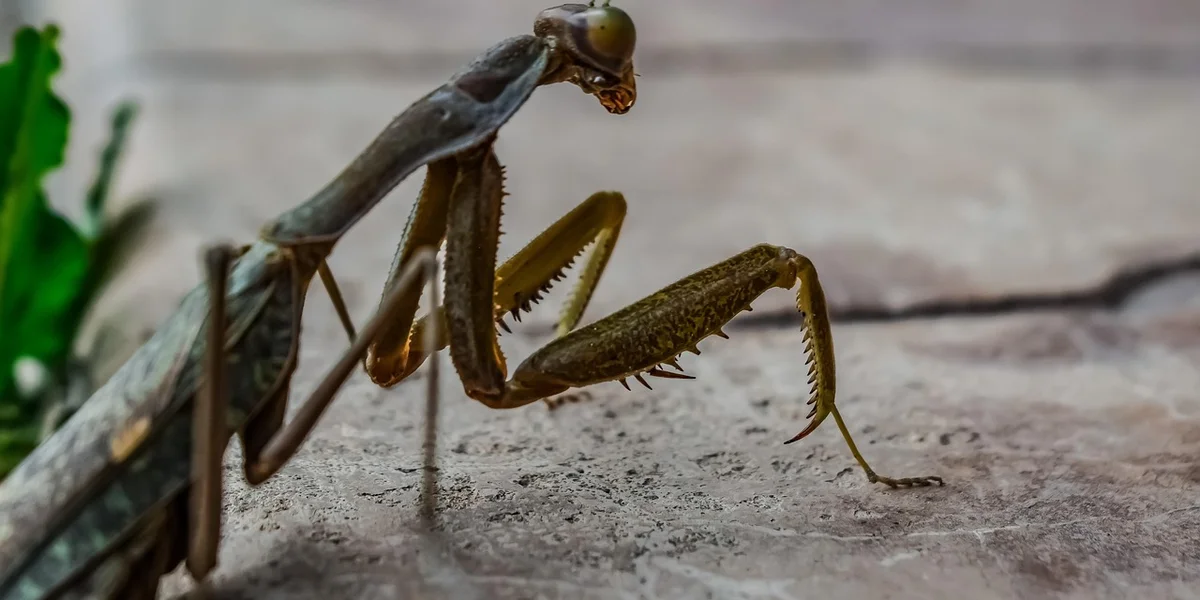
Your mantis’s surroundings play a huge role in how they defend themselves, from the layout of their home to the air they breathe. A well-designed enclosure can make your mantis feel secure, letting their natural defenses shine without constant fear.
Enclosure setup, including hiding spots and climbing structures, directly influences whether a mantis chooses to hide or display. Plenty of foliage and branches give them places to retreat, mimicking the safety of dense vegetation in the wild.
Humidity levels affect molting and activity; too dry, and mantises may become more skittish or struggle to shed old skin. Maintaining proper humidity helps ensure smooth molts, which is when mantises are most vulnerable and rely heavily on camouflage.
Habitat adaptation means your mantis will adjust its behavior based on seasonal cues, like changes in light or temperature. In cooler months, you might notice longer motionless periods as they conserve energy, blending seamlessly into their environment.
Cryptic coloration and extended stillness are behaviors tied closely to their surroundings. When the enclosure mirrors their natural habitat, these defenses become more effective, reducing the need for stressful startle responses.
Here are environmental adjustments you can make to support natural defense mechanisms without causing stress:
- Add live or silk plants to create visual barriers and hiding spots.
- Maintain consistent humidity with regular misting, especially before molts.
- Include vertical elements like sticks or nets for perching and escape routes.
- Use substrate that matches their native ground, such as peat moss for moisture retention.
- Adjust lighting to simulate natural day-night cycles, encouraging normal activity patterns.
By fine-tuning these factors, you help your mantis feel at home, allowing their innate defenses to work smoothly. Small changes, like adding a few extra leaves, can make a big difference in their confidence and well-being.
Effectiveness and Real-Life Defense Examples
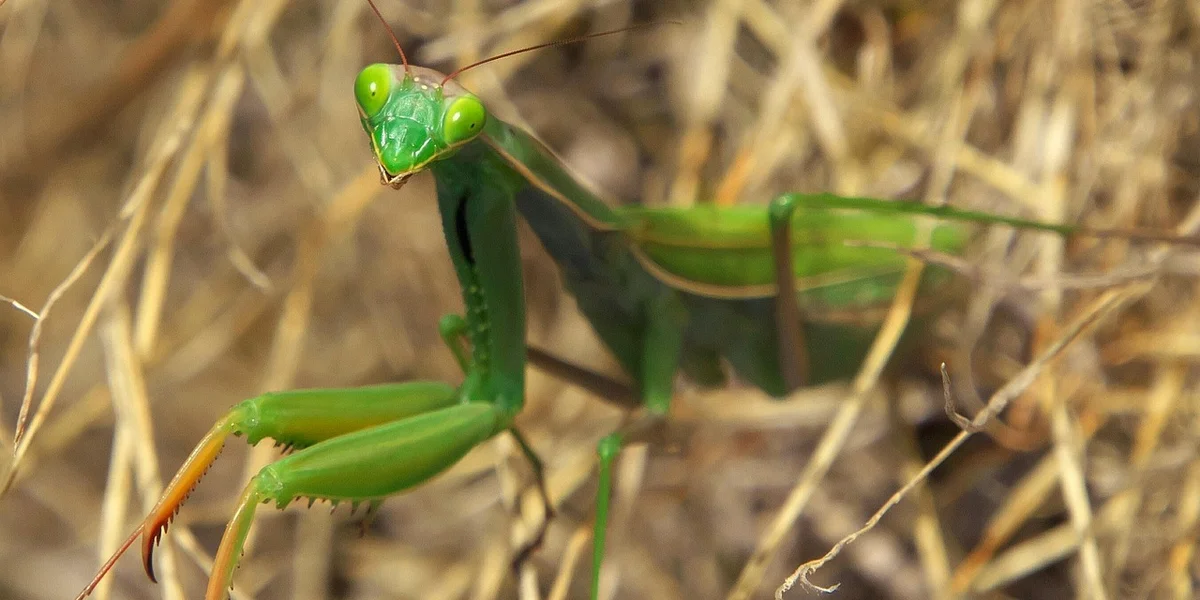
Praying mantises rely on a suite of defense strategies that prove remarkably effective across different environments. In the wild, their camouflage and startle displays often deter birds, reptiles, and larger insects, while in captivity, these same behaviors help them manage stress from handling or enclosure disturbances. Additionally, color patterns help mantises blend with foliage and bark, reinforcing camouflage and mimicry. Thus, coloration may play a key role in survival by reducing detectability. We find that wild mantises face constant threats, making their defenses crucial for survival, but captive ones use them more selectively, usually when they feel startled or insecure.
Evaluating Defense Success in Wild and Captive Settings
In natural habitats, mantis defense mechanisms are highly effective because they exploit predator instincts-like the fear of sudden movement or unrecognizable shapes. Camouflage, for instance, allows them to blend into leaves or bark, reducing detection by hunters such as birds or frogs. In home terrariums, defenses might not be needed as often, but they still work well; a mantis that flares its wings can make even a curious pet cat hesitate. Observing these reactions helps us gauge their comfort levels and adjust care to prevent unnecessary stress.
Stories of Successful Defense Behaviors
One common example is the startle display, where a mantis spreads its wings and rears up to look larger and more threatening. I recall Moss, my Giant Asian Mantis, using this tactic when a housemate’s dog wandered too close to his enclosure-the sudden movement and hissing sound made the dog back away quickly. Another time, Luna, my Ghost Mantis, stayed perfectly still amid dried leaves when I misted her tank, her brown frills matching the background so well I nearly missed her during feeding. These moments show how instinctive and effective their defenses are, even in controlled settings.
- Moss, an adult male Giant Asian Mantis, once faced a persistent fly buzzing near his perch. He slowly tilted his head, then struck a defensive pose with forelegs raised, startling the insect into flying off-a clear win without any physical contact.
- Luna, a subadult female Ghost Mantis, hid seamlessly among twisted vines after I added a new decoration. Her leaf-like appearance kept her safe from my own accidental bumps during maintenance, reminding me to move slowly around her space.
- Sprig, a juvenile Orchid Mantis, reacted to a sudden shadow by flattening against a flower prop. Her pink-and-white marbling made her nearly invisible, and she stayed that way until the “threat” passed, showing how camouflage buys time in uncertain situations.
Why These Mechanisms Work and Lessons for Pet Care
Defense strategies succeed because they tap into basic predator psychology-camouflage breaks up visual cues, while startle displays trigger a “fight or flight” response. For pet owners, noticing when your mantis uses these behaviors can signal discomfort, like too much handling or an insecure enclosure setup. We can learn to mimic natural conditions by adding plenty of hiding spots and avoiding sudden movements, which reduces the need for defensive actions and keeps our mantises calm and healthy. By understanding these mechanisms, we create a safer, more nurturing home that respects their innate instincts.
Questions from Fellow Mantis Friends
Do mantises emit any chemical defenses?
Praying mantises do not produce or release chemical defenses like some other insects. That focus on physical traits highlights what makes them so special. They primarily rely on physical and behavioral strategies to protect themselves. These unique characteristics—such as swiveling necks and raptorial forelegs—set them apart from other insects.
Can mantises mimic leaves or twigs as a defense?
Yes, many mantis species are adept at mimicking leaves or twigs to avoid detection by predators. This form of camouflage allows them to remain hidden in plain sight within their environment.
Are there differences in defense tactics among mantis species?
Defense tactics can vary significantly between mantis species based on their size, habitat, and physical traits. For instance, some may emphasize stealth through mimicry, while others use bold displays or rapid escapes.
Embracing Your Mantis’s Defensive Nature
To keep your mantis feeling secure, offer a well-structured enclosure with hiding spots and handle them gently to reduce stress. Watching their subtle cues, like a sudden freeze or raised forelegs, lets you respond with kindness and prevent unnecessary fright. When you do interact, handle them safely by letting them choose to crawl onto your finger and keeping sessions brief and calm. Always support their body and avoid pinching or squeezing, returning them to the enclosure if they show signs of stress. For more tips on this, you can learn how to handle them safely.
We encourage every keeper to stay curious and committed to learning more about mantis behaviour and habitat needs. Joining online communities or keeping a simple journal of your pet’s habits can deepen your connection and ensure their well-being over time. For a complete care guide on pet praying mantises, including handling and behavior, see our Praying mantis care guide. It covers safe handling, signaling behavior, feeding, and enclosure setup.
Further Reading & Sources
- Defence behaviours of the praying mantis Tenodera aridifolia in response to looming objects – ScienceDirect
- Praying Mantis: Predator-Prey Interactions, Fights, and Aggressive Behaviors | Animal Matchup
- How does a praying mantis defend itself against predators? – Quora
- Context-dependent effects on attack and defense behaviors in the praying mantis Tenodera sinensis | Journal of Experimental Biology | The Company of Biologists
Rowan Hale is a lifelong insect enthusiast who fell in love with mantises for their calm presence, alien elegance, and surprising personalities. After years of keeping and raising a variety of species, Rowan shares practical tips, creative insights, and real-world experience to help others enjoy the quiet magic of mantis care. From setting up the perfect enclosure to understanding their subtle behaviors, Rowan invites readers into a gentle, curious world where every tiny movement feels like a discovery.
Predatory Threats