
6 Mistakes New Breeders Make When Mating Praying Mantises
Published on: February 3, 2026 | Last Updated: February 3, 2026
Written By: Rowan Hale
Hello, fellow mantis friend! Have you ever watched a praying mantis perched like a green statue and wondered about the delicate art of bringing two together for mating?
We’re here to share the six most common slip-ups new breeders face and how to steer clear of them, drawing from hands-on experience with mantises like Luna, our observant Ghost Mantis.
Mating mantises is a nuanced process that demands more than just good timing-it involves reading subtle cues and creating the right setting to keep both insects safe and comfortable.
In this section, we’ll preview the key areas where mistakes often happen:
- Rushing the introduction before mantises are ready
- Misjudging enclosure conditions like humidity and space
- Overlooking behavioral signs of stress or aggression
- Handling mantises improperly during the mating attempt
- Neglecting post-mating care for the female
- Failing to separate the pair at the right moment
Mistake 1: Choosing Immature or Unready Mates
Rushing the pairing process can lead to failed mating or even harm, so we always check for clear maturity signs first. Patience here pays off with healthier mantises and better breeding success.
Look for full wing development in males-their wings should reach the tip of the abdomen and allow short flights. Females need a noticeably plump abdomen, which shows they’re storing energy for egg production.
Wait about one to two weeks after the final molt for males and two to three weeks for females before introducing them. This gentle pause lets their new exoskeletons harden and their bodies settle into adulthood.
To sex mantises correctly, follow these simple steps:
- Observe from above: males have longer wings and a slender abdomen, while females sport shorter wings and a broader, rounder shape.
- Check the antennae and size-males often have longer antennae and are smaller, whereas females are bulkier with shorter antennae.
- Use a soft brush to gently coax movement if needed, avoiding stress.
From my time with Moss, my Giant Asian Mantis, I learned that a calm, observant approach prevents mix-ups. Taking these careful steps ensures you pair mates who are truly ready.
Mistake 2: Poorly Planned Enclosure Setup
A cramped or bare tank can spike stress and lead to aggression, so we focus on creating a safe, roomy home. Spacious enclosures with climbing options mimic their natural habitat and keep both mantises calm.
Choose an escape-proof tank with a secure lid, and add plenty of branches, twigs, and leaves for perching and hiding. These elements give mantises places to retreat, reducing the chance of confrontations. Live plants are safe and beneficial in a praying mantis enclosure, providing extra cover and helping regulate humidity. Choose non-toxic, appropriate plants to ensure safety.
When introducing the male and female, move slowly and calmly to avoid startling them. Place the male gently near the female, allowing him to approach at his own pace without force.
Follow these steps for a smooth introduction:
- Set up the enclosure with stable branches and foliage a day ahead to let scents settle.
- Introduce the male first, giving him time to explore and find a safe spot.
- Add the female carefully, watching for any signs of stress like rapid movement or raised forearms.
Keep the housing stable with consistent temperature and humidity, and minimize disturbances like loud noises or frequent handling. In my setups, like for Sprig the Orchid Mantis, a well-planned environment made introductions feel almost serene.
Mistake 3: Underestimating Cannibalism Risks
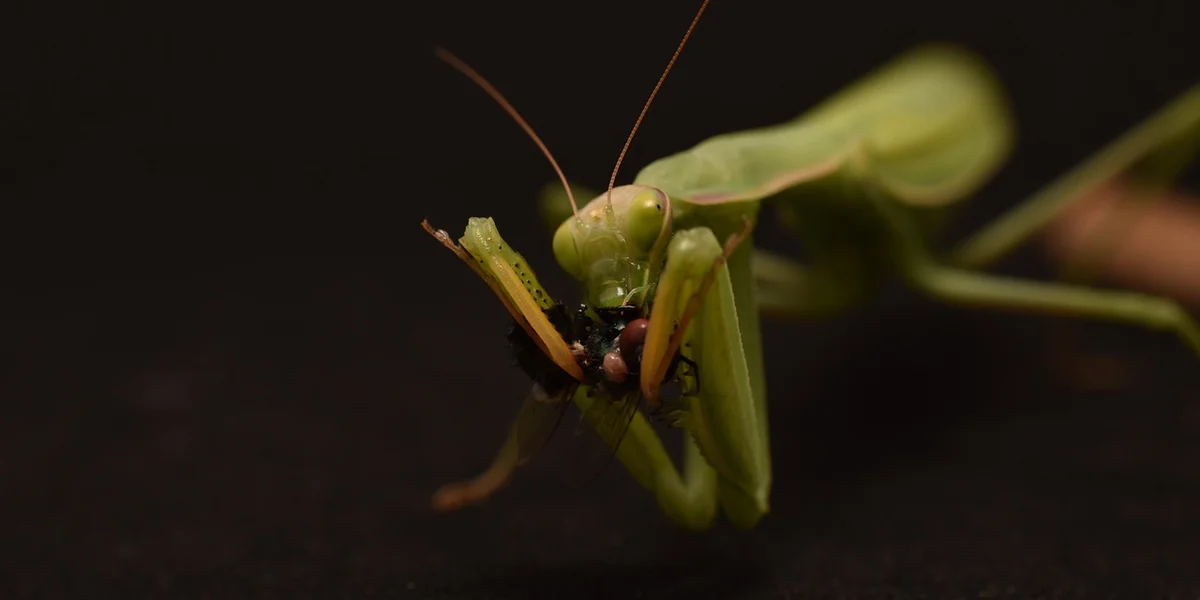
When mating praying mantises, we often see the male approach with slow, deliberate movements, almost like a dancer testing the floor. Watch for the female’s receptiveness—she may stay still, lower her forelegs, or even gently sway, signaling she’s ready for company. In our time with Luna, the Ghost Mantis, we noticed her head tilts and soft rustles meant she was calm and open to interaction, while any sudden twitches warned us to hold back. Understanding these cues is crucial in knowing how to approach the mating process with care.
Aggression can flare up quickly, so keep an eye out for these red flags:
- Rapid strikes with her forelegs, aiming to grab the male.
- Raised forelegs held high, like she’s preparing to pounce.
- Hissing or loud wing flutters, which show she’s feeling threatened.
To prevent cannibalism, start by feeding the female a hearty meal a day or two before introducing the male. A well-fed female is less likely to see her mate as a snack, giving him a safer chance to complete his role. Always have a separation plan ready-use a soft brush or a spare container to gently guide them apart if tensions rise, and never leave them unsupervised for long.
Mistake 4: Ignoring Temperature and Humidity Needs
Mantises thrive when their environment feels just right, much like a cosy greenhouse on a mild day. For common species like Ghost Mantises, aim for temperatures between 22-28°C to keep courtship lively and males energetic enough to approach. Different mantis species have their own optimal temperature and humidity ranges; what works for Ghost Mantises may differ for Orchid Mantises. Always tailor care to the species you keep. Humidity around 60-80% supports healthy molts, preventing stuck skin that can stress them during mating. With Sprig, our Orchid Mantis, we saw how steady warmth encouraged her to perch calmly, while a drop made her too sluggish for romance.
Monitoring and adjusting these levels is simple with a few household tricks:
- Use a digital hygrometer to check humidity daily-it’s as easy as glancing at a clock.
- For gentle boosts, mist the enclosure with lukewarm water, creating a soft dew that mimics morning fog.
- Adjust heat with a low-wattage lamp or move the habitat away from drafts to maintain consistency.
Stable conditions reduce stress, making mantises more receptive and less prone to aggression. By keeping temperatures and humidity steady, you create a safe space where mating can unfold naturally, without the distractions of environmental swings. These are essential habitat requirements for a healthy praying mantis, and meeting them is a practical welfare check. Monitoring these factors provides ongoing insight into the mantises’ overall health. We’ve found that a stable setup not only supports successful pairings but also helps mantises like Moss stay curious and engaged throughout the process.
Mistake 5: Neglecting Post-Mating and Ootheca Care
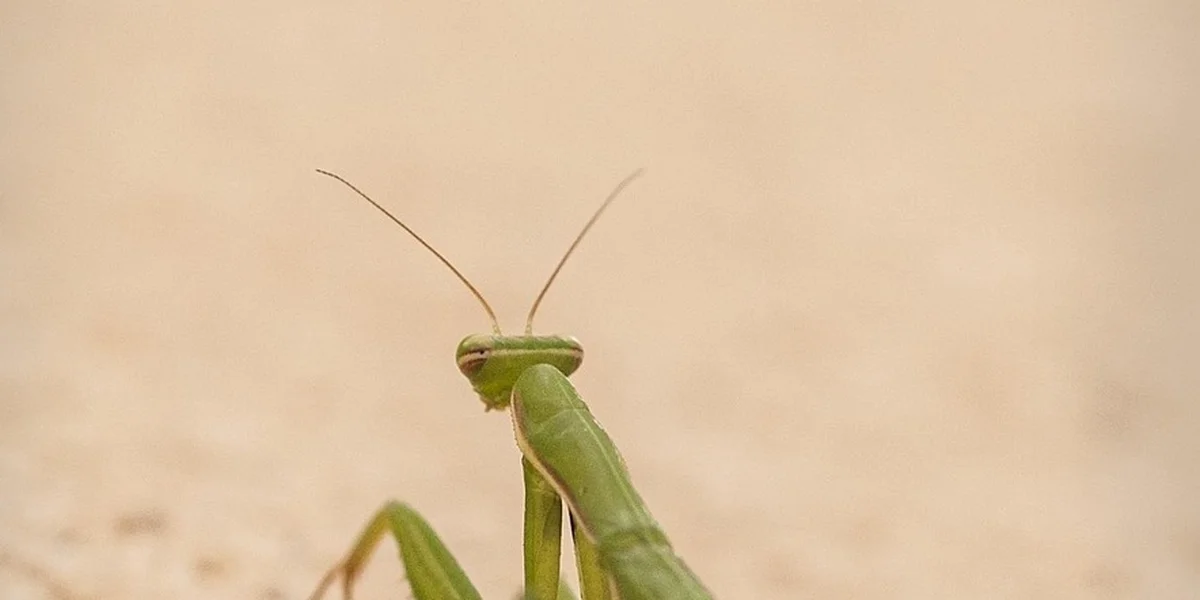
After mating, your female mantis enters a quiet, focused phase where she prepares to lay her egg case, or ootheca. You might notice her becoming more sedentary, pausing her hunts, and carefully inspecting surfaces like twigs or leaves for the perfect spot. She may even stop eating for a day or two, conserving energy for this important task. This phase is crucial for successful egg laying.
Supporting her during ootheca production is key to a healthy clutch. Keep her well-hydrated by misting the enclosure lightly each day, mimicking the gentle dew she’d find in nature. Offer safe, sturdy attachment sites such as clean twigs, broad leaves, or fine mesh where she can securely anchor the foam-like case.
- Mist the habitat daily with warm water to maintain humidity without making it soggy.
- Provide multiple vertical and horizontal surfaces for her to choose from.
- Ensure the environment remains calm and free from loud noises or vibrations.
Once the ootheca is laid, care shifts to protecting the egg case. Avoid moving or touching the ootheca directly, as it’s fragile and easily damaged. Maintain a stable, humid environment around it, and if you plan to hatch the nymphs, set up a separate small enclosure with fine mesh for ventilation and tiny perches.
Mistake 6: Skipping Observation and Record Keeping
Daily observation lets you catch small changes in your mantis’s behavior, feeding, or health before they become big issues. Taking quick notes each day helps you spot patterns, like when Luna, my Ghost Mantis, tilts her head more often before molting. This habit builds a personal log that makes care more intuitive over time.
To maintain genetic diversity in your breeding line, thoughtfully select and rotate mates. Choosing mantises from different sources or lineages reduces the risk of inbreeding and promotes stronger offspring. Keep track of which pairs have mated to plan future rotations. This line-breeding approach aligns with our ethical guide for mantises, emphasizing welfare and responsible, purposeful selection. Documenting lineage and sources supports transparency and helps monitor genetic health.
- Rotate males between breeding sessions to mix genetics.
- Note physical traits and health in your records to guide selections.
- Consider trading with other breeders to introduce new bloodlines.
Small tweaks to the habitat can reduce stress and add enrichment. Simple changes, like rearranging perches or adding a fresh leaf, encourage natural exploration and prevent boredom. Watch how your mantis responds-Moss, my Giant Asian Mantis, always investigates new additions with curious energy.
- Swap out decor items weekly to keep the environment engaging.
- Introduce varied textures, such as smooth stones or rough bark.
- Ensure hiding spots are available to help your mantis feel secure.
Common Mantis Queries
How can I minimize stress during the mating introduction?
Set up the enclosure in advance with stable perches and hiding spots to create a familiar environment. Introduce the mantises calmly and avoid sudden movements to keep them relaxed. A naturalistic safe habitat helps mimic their wild environment and keeps stress low. Include natural textures and suitable plants to provide cover and hunting opportunities.
What should I feed my mantis to prepare for breeding?
Offer a nutritious diet of gut-loaded insects like fruit flies or small crickets to boost energy levels. Feed the female well before mating to reduce cannibalism risks, but don’t overfeed right before the attempt.
How do I handle a failed mating attempt?
Separate the mantises immediately if aggression occurs to prevent harm. Allow them to rest for several days in their own enclosures before considering another introduction. When you are ready to breed, set up a dedicated breeding enclosure designed to minimize stress and support natural mating. A well-planned enclosure should include space, secure containment, and plenty of hiding spots to encourage healthy pairing.
Gentle Guidance for Your Mantis Mating Journey
Always prepare your mantises with proper health checks and feeding schedules before any introductions. Staying attentive during their interactions allows you to step in if signs of stress or aggression arise, keeping both mantises safe and ensuring safe handling interactions.
Responsible pet ownership means making choices that support your mantis’s natural behaviors and comfort. We invite you to continue learning and sharing insights with fellow enthusiasts, as every mantis teaches us something new about their delicate world.
Further Reading & Sources
- Breeding praying mantises | Keeping Insects
- Praying mantis hanky-panky is way weirder than you think | PBS News
- Breeding mantids | Jenny Read
- What to Know for Praying Mantis Mating Season | National Geographic
Rowan Hale is a lifelong insect enthusiast who fell in love with mantises for their calm presence, alien elegance, and surprising personalities. After years of keeping and raising a variety of species, Rowan shares practical tips, creative insights, and real-world experience to help others enjoy the quiet magic of mantis care. From setting up the perfect enclosure to understanding their subtle behaviors, Rowan invites readers into a gentle, curious world where every tiny movement feels like a discovery.
Breeding Practices