
Why Do Praying Mantis Eyes Change Color?
Published on: September 16, 2026 | Last Updated: September 16, 2026
Written By: Rowan Hale
Hello, mantis friend. Have you ever been quietly watching your praying mantis, only to notice its eyes have shifted from a daytime gold to a mysterious, inky black?
A praying mantis’s eyes change color primarily as a response to light levels, helping them see better in different conditions and indicating their daily activity cycle.
While the core reason is light adaptation, the full picture is a fascinating blend of biology, behavior, and even a little bit of mantis mood. We will explore the science behind this incredible trait and what it means for you as a keeper.
- Their eyes act like a built-in camera aperture, adjusting to brightness.
- The color shift is linked to their internal circadian rhythm.
- Observing eye color can give you insights into your mantis’s health and comfort.
The Anatomy of Praying Mantis Eyes
Praying mantis eyes are intricate structures designed for keen vision in their daily lives. Their eyes consist of two main types: large compound eyes and smaller simple eyes called ocelli. Many eyes give mantises a unique visual toolkit. A vision anatomy guide can explain how their two large compound eyes and ocelli work together for depth perception and fast motion detection.
- Compound eyes are made of thousands of tiny units called ommatidia, each acting like a mini-lens to capture light and movement from different angles.
- Ocelli are located on the top of the head and help detect changes in light intensity, aiding in quick reactions to shadows or threats.
- Ommatidia contain pigments and photoreceptor cells that allow mantises to perceive colors and adapt to varying light conditions.
- Unlike human eyes with a single lens, mantis compound eyes provide a mosaic-like view, offering a wider field of vision but less detailed focus.
How Compound Eyes Work
Compound eyes process visual information through a series of coordinated steps. Each ommatidium functions independently to gather light, which the brain then pieces together into a full image.
- Light enters through the cornea of each ommatidium, striking the photoreceptor cells inside.
- Photoreceptors convert light into electrical signals, adjusting sensitivity based on ambient brightness.
- These signals travel to the brain, where they are combined to form a coherent picture of the surroundings.
- In low light, pigments may shift to allow more light in, while in bright conditions, they darken to prevent glare.
The Function of Ocelli
Ocelli serve as an early warning system for mantises, enhancing their survival skills. These simple eyes are especially useful for detecting sudden movements and shifts in illumination.
- They help mantises sense predators approaching from above, triggering a swift escape or defensive posture.
- Ocelli improve hunting efficiency by alerting the mantis to prey movement in peripheral vision.
- During flight or rapid turns, ocelli provide balance and orientation by monitoring light gradients.
- In our care, we’ve noticed mantises like Luna often tilt their heads to use ocelli for scanning the environment.
Common Reasons for Eye Color Changes
Eye color shifts in praying mantises are natural responses to internal and external factors. These changes often reflect the mantis’s health, environment, and growth stage, and can be particularly surprising to anyone who doubts whether praying mantises can change color.
- Light adaptation: Eyes may darken in bright settings to reduce light intake and lighten in dim areas for better vision.
- Age: As mantises mature from nymphs to adults, eye pigments can deepen or alter, such as turning from pale to vivid hues.
- Molting: Before and after shedding their exoskeleton, eyes might appear cloudy or change color temporarily due to fluid shifts.
- Stress: Factors like handling or habitat disruptions can cause eyes to darken briefly as a protective reaction.
Light and Illumination Effects
Light levels play a key role in eye color variations, helping mantises optimize their sight. Adjusting eye pigments allows them to see clearly across different times of day. Recent findings reveal just how capable mantis vision is. Studies highlight their sharp, adaptable eyesight across lighting conditions.
| Lighting Condition | Typical Eye Response |
|---|---|
| Bright sunlight | Eyes darken to black or deep brown |
| Dim or shaded areas | Eyes lighten to pale green or yellow |
| Artificial indoor light | Eyes may shift to intermediate shades like olive |
Age and Developmental Stages
Eye color evolves as mantises grow, marking their progress through life stages. Juvenile mantises often start with lighter eyes that intensify with each successful molt.
- In early instars, eyes are typically pale and may appear translucent to aid in camouflage.
- During molting, eyes can look hazy or blue-tinged as new cuticle layers form beneath the old skin.
- By adulthood, eyes usually settle into a stable color, such as the rich emerald we see in Moss after his final molt.
- Regular observation helps track these changes, reassuring you that shifts are part of normal development.
Environmental Factors Influencing Eye Color
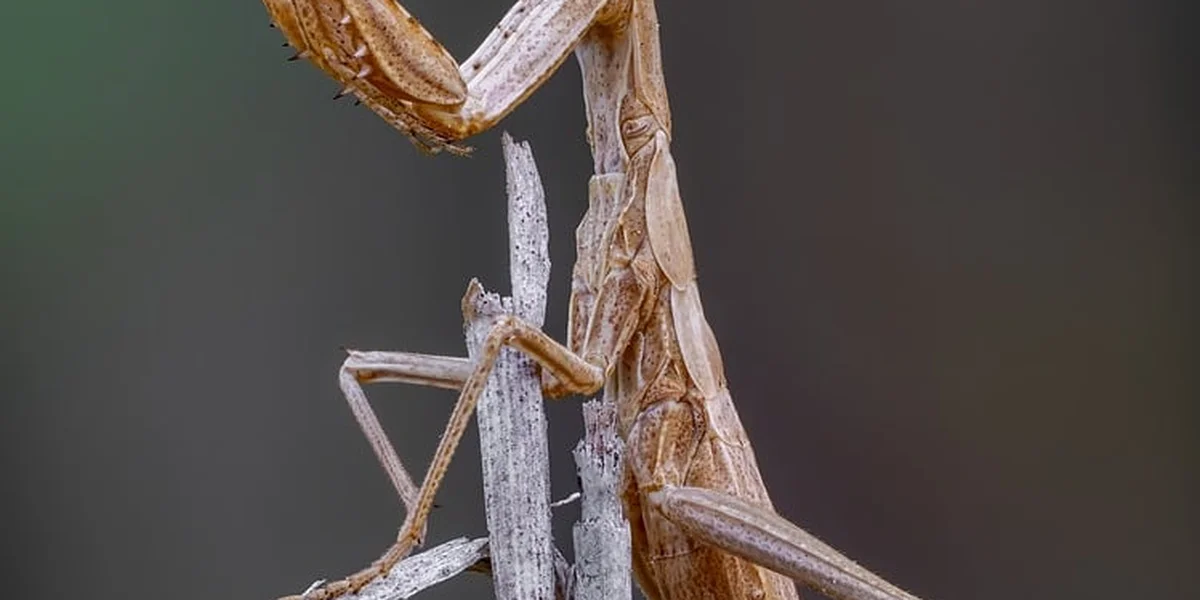
We often notice how a mantis’s eye color shifts with its surroundings, much like a chameleon adjusting to its perch. Temperature, humidity, and habitat design all play roles in these subtle changes, as they directly affect your mantis’s stress levels and overall health. If you spot signs of stress, you can often fix the issue by adjusting its habitat—tweaking temperature and humidity, adding hiding spots, and fine-tuning perch placement. When these factors balance, stress indicators tend to lessen and the mantis thrives.
When conditions aren’t quite right, eyes might darken or lighten as a response to discomfort. By creating a stable environment, you can help minimize stress-related eye shifts and keep your mantis feeling secure.
- Maintain temperatures between 22-28°C (72-82°F) to support steady metabolic function.
- Aim for humidity levels of 50-70%, which helps prevent dehydration and supports healthy molting.
- Include live plants like pothos or safe artificial foliage to provide hiding spots and reduce visual stress.
- Ensure proper ventilation to avoid stagnant air, which can lead to fungal issues and eye irritation.
- Place the enclosure in a quiet area away from direct sunlight or drafts to prevent sudden temperature swings.
Temperature and Humidity Adjustments
Keeping your mantis’s home consistent doesn’t require fancy gear-simple household items can make a big difference. Gradual adjustments are key, as sudden shifts can startle your mantis and trigger unwanted eye color changes.
- Use a small digital thermometer and hygrometer to monitor conditions daily; we check ours each morning during feeding.
- For a gentle warmth boost, place a warm water bottle wrapped in a towel near the enclosure, but not touching it.
- Increase humidity by lightly misting the tank with lukewarm water from a spray bottle, focusing on plants and sides rather than directly on your mantis.
- If things get too humid, crack the lid slightly or add a small computer fan for airflow, running it for short intervals.
- Rotate seasonal adjustments slowly over days, not hours, to let your mantis acclimate without stress.
Camouflage and Predation Behaviors
Eye color isn’t just about mood—it’s a clever tool for survival in the wild. Many mantises use eye shifts to blend into their environment, making them nearly invisible to both prey and predators. Their body color and patterns, which can change to mimic leaves, bark, or flowers, play a crucial role in camouflage and survival through mimicry.
Our Ghost Mantis, Luna, often softens her eye hue to a misty grey when resting among dried leaves, mimicking shadows. This adaptive trick helps her remain undetected while she waits patiently for an unsuspecting cricket to wander by.
In hunting, darker eyes can signal focus, like when Moss, our Giant Asian Mantis, zeroes in on a fly with intense, almost black pupils. Watching him tilt his head and adjust his gaze reminds us how these tiny changes enhance their natural prowess.
Identifying Normal vs. Problematic Eye Changes
Not every shift in eye color is cause for concern—some are part of a healthy mantis’s daily rhythm. Learning to spot the difference ensures you can respond appropriately without unnecessary worry. You can also tell if a mantis is stressed by watching for behavioral signs, such as tense posture, erratic movements, or reduced feeding. Recognizing these cues helps you adjust care and environment to support your mantis’s wellbeing.
- Normal changes include slight darkening during feeding or molting, which usually reverses within hours.
- Problematic signs involve persistent darkening lasting days, unusual cloudiness, or redness that doesn’t fade.
- Healthy eyes appear clear and vibrant, even when color varies, while unhealthy ones might look dull or swollen.
- Temporary lightening in bright light is typical, but constant pale eyes could indicate stress or illness.
Signs of Stress or Illness
Beyond eye color, watch for other cues that something might be off. Combining visual checks with behavior observations gives you a full picture of your mantis’s well-being. Signs of a healthy mantis include steady movement and regular feeding. If you notice lethargy, poor appetite, or unusual hiding, those are signals to worry and monitor closely. For more information, check out the article on Signs of a healthy mantis.
- Cloudy or milky eyes that don’t clear up after molting.
- Lethargy, such as spending most of the day motionless when normally active.
- Loss of appetite or refusing food for more than a couple of days.
- Erratic movements or frequent rubbing of the eyes with forelegs.
If you notice these, start by gently adjusting the habitat-raise humidity if eyes seem dry, or dim lights if they appear sensitive. Monitor closely for a day or two, and if things don’t improve, consider consulting a vet experienced with invertebrates.
Common Care Mistakes to Avoid
Small errors in routine can lead to big issues, including those puzzling eye changes. Steering clear of these pitfalls helps your mantis thrive with bright, healthy eyes.
- Avoid placing enclosures in direct sunlight or under harsh artificial lights, which can cause overheating and stress.
- Don’t handle your mantis too frequently; limit interactions to brief, calm sessions to prevent anxiety.
- Never feed wild-caught insects without quarantining, as they might carry pesticides or parasites.
- Skip overcrowding the habitat; give your mantis ample space to reduce competition and territorial stress.
- Always use dechlorinated water for misting to avoid chemical irritation to the eyes and skin.
Supporting Your Mantis’s Eye Health
A mantis with healthy eyes is an alert, vibrant hunter, and their eye color is one beautiful sign of that vitality. Understanding mantis eyesight reveals that they perceive color and movement differently from humans. This insight guides how we design their habitat to support their color perception and vision. We can support their vision and eye color stability through thoughtful habitat design, proper nutrition, and a peaceful routine.
Think of it as creating a little sanctuary where your mantis feels secure enough to be its most brilliant self.
Proper Lighting and Habitat Setup
Light is the conductor of your mantis’s daily rhythm, directly influencing their activity and eye pigment. The goal is to mimic the gentle, dappled light of their natural environment, avoiding harsh, direct beams that can cause stress.
My Ghost Mantis, Luna, always settles best in her shaded corner, her eyes a steady, dark brown when the light is soft and indirect.
- Use natural, indirect sunlight from a nearby window, but never place the enclosure in the window itself where temperatures can soar.
- For artificial light, a simple LED or low-wattage bulb on a 12-hour timer works perfectly to establish a day/night cycle.
- Place lights above or to the side of the enclosure, not shining directly into it, to prevent glare and overheating.
- Ensure the habitat has plenty of foliage, twigs, and hiding spots so your mantis can retreat from the light whenever it wishes.
- Avoid heat lamps or intense basking lights, as these are unnecessary for mantises and can be detrimental.
Feeding and General Care Practices
What your mantis eats fuels its entire body, and a nutrient-rich diet supports the pigments and health of those remarkable eyes. A consistent feeding schedule with varied, high-quality prey prevents stress and provides the building blocks for optimal health.
My Giant Asian Mantis, Moss, shows his most vivid green hues, including around his eyes, when his diet is diverse and plentiful.
- Offer a primary diet of live gut-loaded insects like flightless fruit flies for nymphs and crickets or roaches for larger mantises.
- Supplement their diet with nutrient-rich feeders like black soldier fly larvae or the occasional waxworm for a fat boost.
- Establish a regular feeding schedule-every two to three days for adults-to create a predictable, low-stress routine.
- Always provide a light misting of fresh water on the enclosure walls or leaves daily; hydration is vital for all bodily functions, including vision.
- Handle your mantis infrequently and with extreme care, as a calm environment supports overall well-being and stable eye color expression.
Questions from Fellow Mantis Friends
How quickly can a praying mantis’s eye color change in response to light?
The color shift typically occurs within minutes as their eyes adapt to varying light levels. This rapid adjustment helps maintain clear vision during daily activity cycles.
Are there any praying mantis species that do not exhibit eye color changes?
Most species show some color variation, but it may be subtle or absent in certain types due to genetic or environmental factors. Observing your individual mantis will help you learn its specific habits and normal eye appearance. The role of diet and genetics in praying mantis coloration helps explain some of these differences. Knowing this can aid you in interpreting color changes as signals of health or development rather than just appearance.
What does it mean if my mantis’s eyes remain dark all the time?
Consistently dark eyes might signal ongoing stress, illness, or unsuitable habitat conditions like improper lighting. Review your care setup and monitor for other signs of distress to ensure your mantis’s well-being.
A Final Look at Those Shifting Eyes
Remember, your mantis’s eyes are a beautiful, real-time window into its well-being, shifting from light to dark to help it hunt and adapt to the light. By providing a proper habitat with correct temperature, humidity, and a stress-free environment, you support the healthy function behind this incredible color change. To truly support this, create a naturalistic, safe habitat for your praying mantis that mimics its wild surroundings.
Being a thoughtful mantis keeper means observing these subtle details with a gentle, patient eye, always seeking to learn more about your pet’s unique needs. Your ongoing curiosity and commitment to their care is what truly allows these fascinating creatures to thrive in your home.
Further Reading & Sources
- Why do praying mantises’ eyes sometimes appear to be black? – Quora
- Preying mantis eyes during the day, and during the night – www.photomacrography.net
- why do their eyes change color? – Mantis religiosa – BugGuide.Net
- Praying Mantis – North American Insects & spiders
Rowan Hale is a lifelong insect enthusiast who fell in love with mantises for their calm presence, alien elegance, and surprising personalities. After years of keeping and raising a variety of species, Rowan shares practical tips, creative insights, and real-world experience to help others enjoy the quiet magic of mantis care. From setting up the perfect enclosure to understanding their subtle behaviors, Rowan invites readers into a gentle, curious world where every tiny movement feels like a discovery.
Common Health Issues