
How Good Is Praying Mantis Vision? Eyesight Capabilities Revealed
Hello there, mantis friend. Have you ever been watched by a praying mantis? That slow, deliberate head turn, those enormous, dark pools of eyes that seem to absorb the light around them-it feels deeply intelligent.
Praying mantis vision is exceptionally good, combining a massive field of view with specialized depth perception and the ability to detect movement far beyond human capability.
Their sight is a complex, multi-layered system built for one primary purpose: the hunt. Let’s peek into their world and reveal the key capabilities that make their vision so remarkable.
- They possess a panoramic, nearly 360-degree field of view.
- A unique ‘peering’ behaviour creates 3D vision with just two eyes.
- They can see a type of slow-motion world, perceiving flickers of light we would completely miss.
- Some species may even see colours we can’t, like ultraviolet light.
The Fundamentals of Praying Mantis Vision
Imagine your mantis sees the world as a living kaleidoscope-a shifting mosaic of light, movement, and colour that guides every twitch and turn. Their vision is a delicate dance of perception, built to notice the tiny details we might miss.
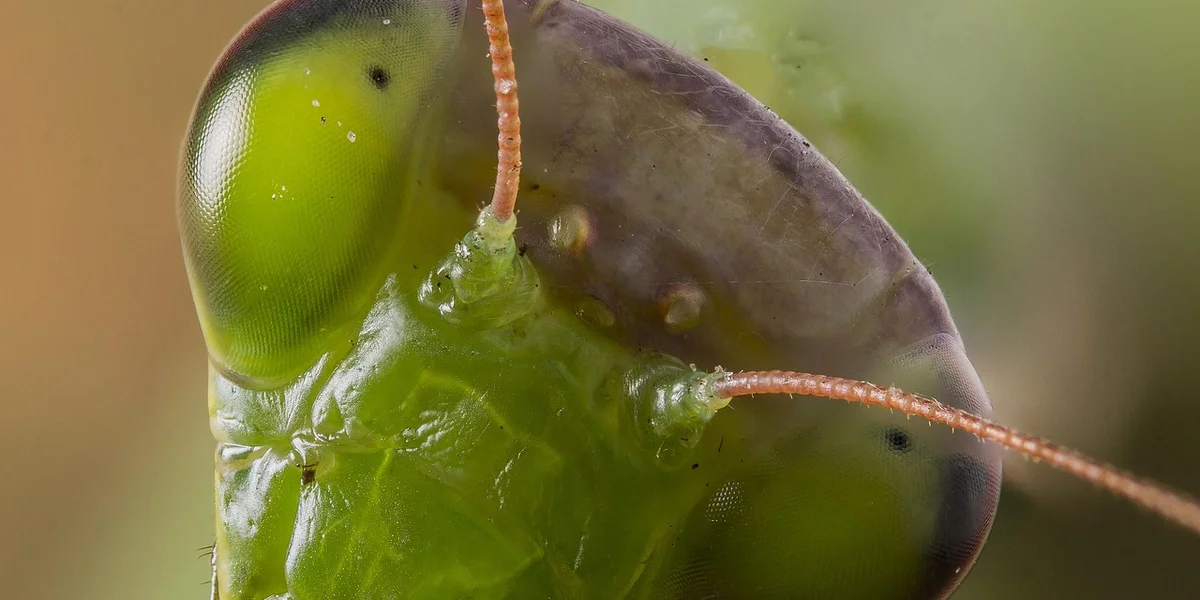
Compound eyes are the main visual organs, made up of thousands of tiny units called ommatidia. Each ommatidium acts like a single pixel, working together to form a broad, fragmented view of their surroundings.
- Praying mantises have an almost panoramic visual field, allowing them to see movement from nearly all directions without turning their heads.
- They are primarily diurnal, meaning they are most active during daylight hours when their vision is sharpest.
- Their eyes adapt quickly to changes in light, helping them hunt effectively from dawn until dusk.
- Mantises rely heavily on motion detection, which is why still prey can sometimes go unnoticed.
Anatomy of Mantis Eyes: Compound Eyes and Ocelli
Each compound eye contains thousands of ommatidia-in some species, up to 10,000-that capture light and create a detailed, if pixelated, image. This structure lets them detect rapid movements with incredible precision, essential for ambushing prey.
Photoreceptors within the ommatidia respond to specific wavelengths, granting mantises the ability to see colours and even ultraviolet light. This spectral sensitivity helps them distinguish between potential mates, prey, and threats in their vibrant world.
Three simple eyes, called ocelli, sit on the top of their heads and act as light sensors. These ocelli detect shifts in brightness and shadow, providing an early warning system for approaching predators.
How Mantis Vision Processes the World
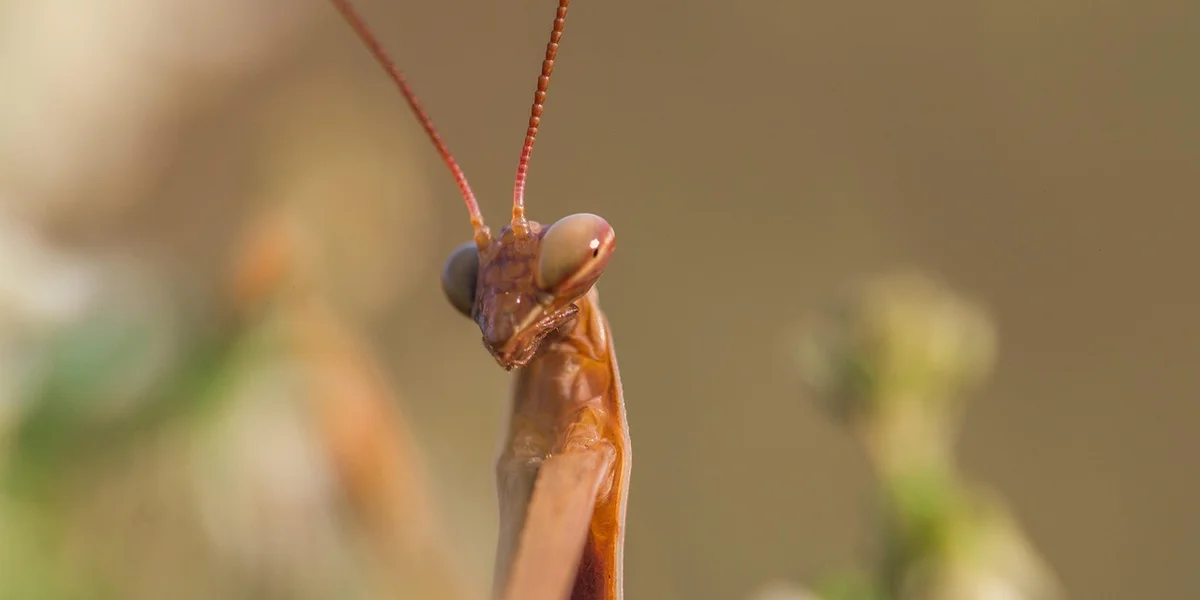
Inside a mantis’s head, specialized neural pathways in the optic lobes work tirelessly to interpret visual cues from their surroundings. These optic lobes act like a high-speed processor, filtering out irrelevant details and focusing on motion and depth to help your mantis navigate and hunt with precision. They excel at detecting even the faintest flicker of movement, which is why a still mantis can suddenly spring into action when prey wanders into view.
When hunting, mantises rely on a clever sequence of visual tricks to pinpoint and capture their meals. Here’s how it typically unfolds. Mantises are true carnivores, and in some cases they may exhibit cannibalistic behavior, especially during mating. This carnivorous nature helps explain their fierce hunting tactics.
- Motion Parallax: As your mantis sways its head side to side, objects at different distances appear to move at varying speeds. Closer items shift more rapidly, while distant ones seem slower, allowing the mantis to judge depth accurately.
- Binocular Vision: With their eyes positioned for overlapping fields of view, mantises combine input from both eyes to create a 3D map of their target. This helps them gauge the exact distance before striking.
- Strike Timing: Using cues from motion and depth, the mantis calculates the perfect moment to extend its raptorial arms, ensuring a swift and successful catch.
Beyond motion and depth, mantises possess polarization vision, which lets them perceive the orientation of light waves in the sky. This ability acts like a built-in compass, helping them navigate under cloudy skies or in low light by detecting subtle patterns in polarized light that are invisible to us. Researchers are also exploring how mantises perceive color. This color vision complements polarization cues and shapes how they detect prey in different light. For hunters, it means they can spot prey more easily in dappled sunlight or shaded areas, giving them an edge in varied environments.
Comparing Mantis Vision to Human Vision
Understanding how mantis vision differs from ours can deepen your appreciation for these fascinating pets and inform how you care for them. While we rely on sharp detail and a broad color palette, mantises prioritize motion detection and a wider field of view to thrive in their world. Knowing about the mantis nervous system can show why your pet insect is surprisingly perceptive. This insight helps you tailor enrichment and care to match their natural behaviors. The table below highlights key differences to give you a clear picture.
| Aspect | Mantis Vision | Human Vision |
|---|---|---|
| Visual Acuity | Lower resolution, optimized for detecting movement over fine details | High resolution, ideal for reading text and recognizing faces |
| Color Range | Includes ultraviolet (UV) light, expanding their perception beyond our visible spectrum | Limited to red, green, and blue wavelengths without UV sensitivity |
| Field of View | Nearly 360 degrees, allowing them to monitor surroundings without turning their head | About 180 degrees, requiring head movements to see behind |
Spectral sensitivity is another area where mantises outshine us, as they can see UV light that we cannot. This extra sensitivity means they might perceive patterns on flowers or prey that reflect UV, adding a hidden layer to their hunting and mating behaviors. For instance, some insects have UV markings that make them stand out to a mantis, much like a neon sign in a dim room.
These visual differences directly impact how you interact with and care for your pet mantis. Here’s a quick list of practical considerations:
- Place enclosures in areas with gentle, indirect light to avoid overwhelming their sensitive eyes, as harsh UV or bright flashes can cause stress.
- Use slow, deliberate movements when handling or feeding to prevent startling them, since their motion detection is highly tuned.
- Choose prey that moves naturally, like live fruit flies, to trigger their hunting instincts effectively, rather than static items they might ignore.
- Avoid using UV lamps unnecessarily, as prolonged exposure could disorient or harm your mantis, given their heightened sensitivity.
Depth Perception and 3D Vision in Mantises
Praying mantises rely on binocular vision to judge distances with incredible accuracy, thanks to their forward-facing eyes that create overlapping fields of view. This eye placement lets them perceive depth in three dimensions, making every strike a precise calculation during hunting. This depth perception guides hunting behavior, guiding when they lunge as prey comes into range. We often see this in action when a mantis tilts its head slightly, gauging the exact moment to lunge at prey.
In a clever bit of research, scientists fitted mantises with tiny 3D glasses to test their depth perception, showing they can detect objects in 3D much like we do. This fun experiment highlights how their vision isn’t just sharp-it’s spatially aware, helping them navigate complex environments. Imagine watching your pet mantis “see” in layers, much like how we enjoy a 3D movie!
To observe 3D vision behaviors in your pet mantis, follow these simple steps:
- Place a small, moving object like a fruit fly or a dangling thread within their line of sight.
- Watch how they track it with slow, deliberate head movements, adjusting their stance.
- Note the accuracy of their strikes-this shows their brain is processing depth cues in real time.
With my mantis Luna, I’ve noticed she’ll often pause and “measure” the distance before pouncing, a quiet dance of calculation. Observing these moments up close reveals the hidden intelligence behind those still, watchful eyes.
Practical Care Tips Based on Mantis Vision
Your mantis’s vision directly influences how you should feed them, so use live prey that triggers their motion detection. Offering wiggling insects like crickets or flies taps into their natural hunting instincts, ensuring they eat well and stay engaged. In a praying mantis feeding schedule species comparative guide, you can compare how often each species should be fed and what prey size is appropriate. This helps tailor meals to your specific mantis. Here’s how to do it effectively:
- Choose prey that moves erratically to catch their eye, such as small moths or larvae.
- Hold the prey with tweezers and move it slowly in front of them, mimicking natural movement.
- Allow them to strike from a perch, which helps them use their depth perception for a clean catch.
When setting up their enclosure, consider elements that reduce visual stress and support their eyesight. A well-designed habitat includes soft, indirect lighting to avoid glare, neutral background colours like greens or browns to blend with their surroundings, and multiple perches at different heights for optimal viewing angles. This mimics the dappled light of a garden, where they feel most at ease.
- Lighting: Use low-wattage bulbs or natural light filtered through a curtain to prevent overwhelming their sensitive eyes.
- Background colours: Stick to earthy tones that don’t contrast sharply, reducing the chance of startling reflections.
- Perches: Add branches or vines at varying levels, giving them vantage points to survey their territory comfortably.
Handling your mantis requires slow, deliberate movements to avoid triggering their motion-sensitive vision. Move your hand gradually from the side rather than above, as sudden gestures can make them feel threatened and lead to stress. I’ve found with Moss that a calm approach lets him relax, often leading to gentle climbs onto my finger without a flinch.
Common Myths and Facts About Mantis Vision
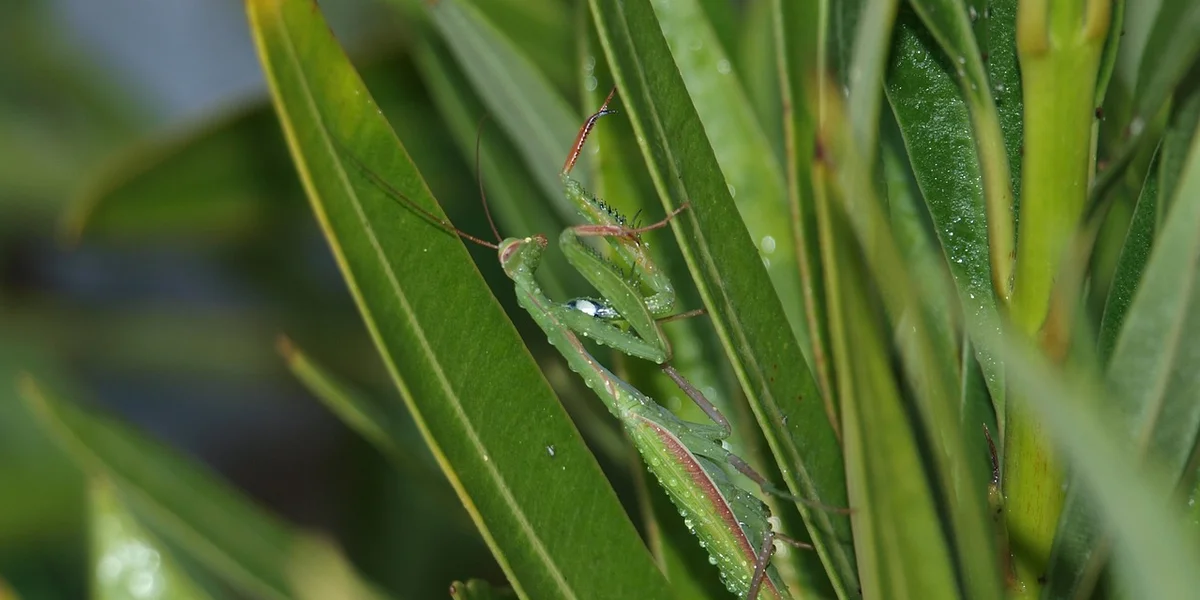
Many misconceptions float around about what a praying mantis can truly see. Let’s gently separate the garden folklore from the fascinating science of their world. These unique traits—binocular vision and lightning-fast strikes—show what makes praying mantises so special. You can explore more about these characteristics at these unique traits. They highlight why mantises stand out among insects.
Myth vs. Fact: Clearing the Air
| Myth | Fact |
|---|---|
| Mantises can see perfectly in complete darkness. | Their vision is designed for daylight. In pitch black, they are nearly blind and rely on other senses. |
| They see the world in black and white. | They possess a form of trichromatic vision, sensitive to green, blue, and ultraviolet light. |
| A mantis’s vision is as sharp as a human’s across all distances. | They have exceptional motion detection up close but see distant objects as blurry shapes. |
| They cannot learn or remember visual information. | Studies show they can learn to distinguish between different shapes and patterns for food rewards. |
Illuminating Facts About Their Sight
Beyond the myths, their visual capabilities are a marvel of nature’s engineering.
- Diurnal Specialists: Their eyes are fine-tuned for the bright, complex visuals of daytime, making them most active and visually alert when the sun is up.
- Motion Masters: They excel at detecting the slightest movement, a trait honed for spotting prey and avoiding predators in a busy environment.
- Visual Learners: Research confirms they can form visual memories, such as recognizing a specific feeding dish or a safe perch based on its appearance.
- Pupil Spotlights: The dark pseudopupil in the center of each compound eye is not a true pupil but an area that absorbs light, helping them gauge distance with stunning accuracy for a precise strike.
Observing my Ghost Mantis, Luna, I’ve seen her track my finger not as a threat, but as a curious, moving shape in her well-lit domain. It’s a quiet reminder of how their world is built on movement and light.
Exploring Further: Tools and Community Resources
Your curiosity about their vision doesn’t have to stop here. A wonderful array of tools and fellow enthusiasts can help you see the world through their eyes.
Vision Simulators and Educational Apps
While specialized, some software and mobile apps attempt to simulate the perspective of compound vision. These are fantastic for understanding how a mantis might perceive a flower or a potential meal as a mosaic of shapes and motion. They offer a captivating, educational glimpse into a sensory world so different from our own.
Online Havens for Mantis Keepers
The journey of learning is best shared. These communities are filled with experienced keepers.
- Reddit Communities: Subreddits like r/mantids are vibrant spaces to share photos, ask specific care questions, and read about others’ visual observations of their pets.
- Dedicated Forum Sites: Several long-running mantis forums host deep archives of care sheets and scientific discussions on mantis biology, including vision.
- PDF Guides & Scientific Papers: Many universities and enthusiast sites offer free, in-depth PDFs on mantis anatomy and behavior for those wanting to dive deeper.
- iNaturalist: This platform is excellent for connecting with a broader community of naturalists and contributing your own observations.
Join the Conversation
We encourage you to find a forum or social media group that feels like home. Sharing your own notes, like the unique way your mantis tilts its head to judge distance, adds valuable real-world data to our collective knowledge. It’s how we all learn and grow as caretakers for these remarkable creatures.
FAQs on Mantis
What is a praying mantis vision simulator?
A praying mantis vision simulator is a digital tool that replicates how mantises perceive their environment. It helps pet owners visualize the mosaic-like images and motion sensitivity unique to mantis eyesight. If you’re considering a mantis as a pet, understanding their sensory world can help weigh the [pros and cons of mantises](https://mypetmantis.com/are-praying-mantises-good-pets-pros-and-cons-explained) in terms of keeping one. This context highlights why mantises can be fascinating to observe yet demanding in care.
Where can I find a praying mantis vision PDF?
You can locate PDFs on praying mantis vision through academic institutions and dedicated mantis care websites. These documents often include research on vision anatomy and practical care advice for enthusiasts. Some resources even include a ‘many eyes’ overview or a vision anatomy guide that explains the mantis’s compound eyes and depth perception. These guides help demystify how mantises see their world.
What is the praying mantis vision Reddit community?
The praying mantis vision Reddit community is an online group, such as r/mantids, where keepers discuss observations and care tips. It offers a space to share experiences and ask questions about mantis behavior and vision. It also provides guidance on how to handle and interact with mantises safely to prevent stress or injury. Members emphasize calm, gentle movements and observing mantises from a respectful distance.
Final Reflections on Your Mantis’s Sight
Your mantis relies on its sharp, motion-tuned vision to hunt and thrive, so always provide an open enclosure with clear sightlines and gentle lighting. Position feeders where your mantis can spot them easily, mimicking the natural challenges they excel at overcoming. To create a naturalistic, safe habitat for your praying mantis, add branches, leaves, and varied textures that mimic its native environment. Keep the enclosure secure and free of hazards while providing these features to support natural hunting and resting behavior.
Responsible mantis keeping means observing your pet’s behavior and adapting care to support its unique abilities as you learn. We encourage you to keep exploring mantis care guides and connect with fellow enthusiasts to grow your confidence and knowledge together.
Further Reading & Sources
- 3-D Vision in Praying Mantises May Help Robots See | National Geographic
- Natural behaviour with artificial stimuli: probing praying mantis vision | JOV | ARVO Journals
- The Unique 3D Vision of the Praying Mantis Could Help Robots Learn to See
- 3-D Praying Mantis Vision Confounds Evolution | The Institute for Creation Research
Rowan Hale is a lifelong insect enthusiast who fell in love with mantises for their calm presence, alien elegance, and surprising personalities. After years of keeping and raising a variety of species, Rowan shares practical tips, creative insights, and real-world experience to help others enjoy the quiet magic of mantis care. From setting up the perfect enclosure to understanding their subtle behaviors, Rowan invites readers into a gentle, curious world where every tiny movement feels like a discovery.
Common Health Issues