
How Do Praying Mantises Hunt? An In-Depth Look at Their Hunting Behaviour
Hello there, fellow mantis friend.
Have you ever watched a praying mantis remain utterly motionless for what feels like an age, only to explode into a blur of action in the blink of an eye?
Praying mantises hunt using a masterful combination of extreme patience, incredible camouflage, and a lightning-fast strike with their specialised forelegs.
But this simple answer hides a world of fascinating complexity. The way a mantis hunts involves a symphony of sensory perception, anatomical adaptation, and instinctive behaviour.
In this article, we will explore:
- The unique anatomy that makes them such effective predators.
- The step-by-step stages of their hunting strategy, from the first twitch to the final capture.
- The surprising intelligence and adaptability they display in different situations.
The Anatomy of a Mantis Hunt: How Their Bodies Work
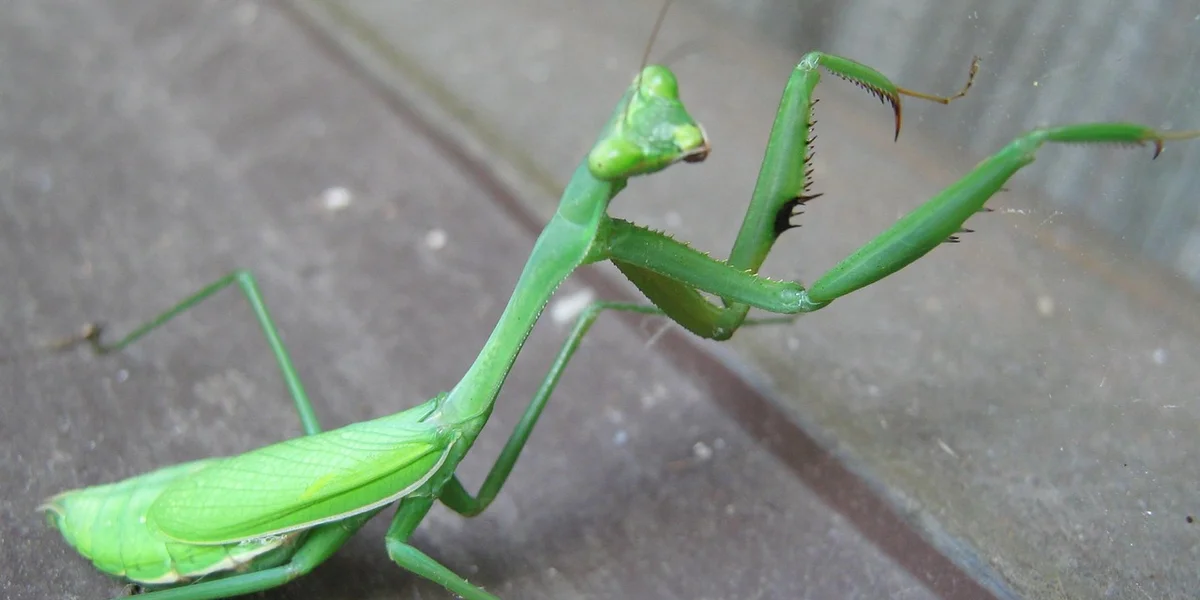
Praying mantises have bodies perfectly tuned for hunting, with every part working in harmony to capture prey. Their entire form is a masterpiece of evolutionary design, built for stealth and sudden action. We often watch our mantis, Moss, and marvel at how his green body blends into leaves, waiting patiently for the right moment. These traits reveal the unique characteristics that make praying mantises so special. Their triangular heads and long, quick forelegs epitomize this distinction.
Raptorial Forelegs in Action
Those folded front legs you see are not just for show-they are powerful tools called raptorial forelegs. Raptorial forelegs act like spring-loaded traps, snapping shut in an instant to seize unsuspecting insects. They are lined with sharp spines that grip prey tightly, preventing escape. When Moss strikes, his forelegs unfold with a swift, precise motion, much like a gardener snipping a stem with shears.
Here is how they work in a typical hunt:
- The mantis folds its forelegs close to its body, keeping them hidden and ready.
- As prey approaches, muscles tense, storing energy like a coiled spring.
- In a flash, the forelegs extend and close around the target, spines digging in firmly.
- Once caught, the mantis uses its strong grip to hold the prey while feeding.
We have seen Luna, our Ghost Mantis, use her delicate forelegs to gently grasp tiny fruit flies without crushing them. This gentle yet firm hold shows how adaptable these limbs are, whether for small or large prey.
Strike Speed and Precision
Mantis strikes are incredibly fast, often taking less than a tenth of a second from start to finish. Their strike speed is so rapid that it can be hard to follow with the human eye, happening in mere blinks. This quickness comes from specialized muscles that release stored energy in a burst, allowing for minimal movement and maximum surprise.
Precision is just as vital as speed in their hunting technique. Mantises aim with remarkable accuracy, adjusting their strike based on prey movement and distance. They do not just lunge randomly; they calculate the best angle to ensure a successful catch. Watching Sprig, our Orchid Mantis, we notice how she tilts her body slightly before striking, almost as if she is lining up a shot.
Key factors that contribute to their precision include:
- Excellent depth perception from their stereo vision.
- Fine-tuned muscle control in the neck and thorax.
- The ability to remain perfectly still until the last possible moment.
In our care, we have observed that a well-fed mantis might strike more deliberately, while a hungry one acts with urgent speed. This variation highlights how their hunting behavior adapts to their needs and environment.
Sensory Superpowers: Vision and Detection
Praying mantises rely on sharp senses to locate and track their prey, with vision playing a starring role. Their large, compound eyes give them a wide field of view, helping them spot movement from various angles. The humid air in their enclosure seems to heighten their awareness, as we have seen with Moss, who perks up at the slightest rustle. According to a vision anatomy guide, mantises have multiple eyes—the two large compound eyes and several simple ocelli—that support depth perception and motion detection. This helps explain their keen responsiveness in Moss’s enclosure.
Motion Detection and Head Rotation
Mantises are masters at detecting motion, using their eyes to pick up even subtle shifts in their surroundings. Motion detection is their primary way of finding food, as they often ignore still objects until they move. Their heads can rotate nearly 180 degrees, allowing them to scan without moving their bodies and giving away their position.
Here is how head rotation aids in hunting:
- The mantis remains motionless, blending into plants or decor.
- It slowly turns its head to survey the area, using its eyes to track potential prey.
- Once movement is detected, the head aligns with the target for a better aim.
- This rotation minimizes body movement, keeping the hunt stealthy.
Luna, with her leaf-like appearance, often rotates her head in a slow, thoughtful manner before striking. This head-tilting behavior not only helps her judge distance but also adds to her camouflaged pose, making her nearly invisible. We have found that providing perches at different heights encourages natural head movements, enriching their hunting practice in captivity.
Hunting Strategies: Ambush and Stalk Tactics
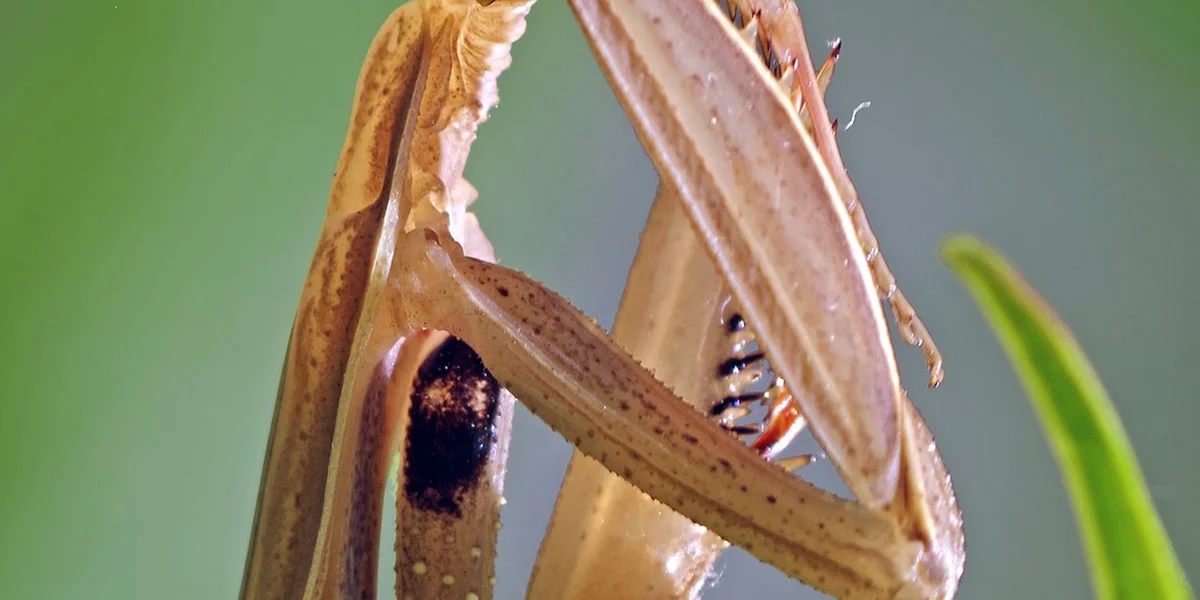
Praying mantises rely on two primary methods to secure their meals: ambush and stalking. Ambush hunters remain utterly still, often for hours, waiting for unsuspecting prey to wander within reach. This patience pays off when they unleash a lightning-fast strike with their specialized forelegs. Like hunting, defense matters too. When threatened, mantises use camouflage and warning displays to deter predators, and may strike with their spiny forelegs in self-defense.
Stalking involves a slow, deliberate approach where mantises inch closer to their target. They move with such subtlety that prey rarely detects them until it is too late. This method demands sharp eyesight and precise timing, much like our Moss, who often creeps forward with focused intensity before pouncing.
- Ambush: Perfect for stationary perches like branches or leaves.
- Stalk: Ideal when prey is active but unaware.
- Both tactics use those powerful, spiny raptorial legs for a secure grip.
Camouflage and Predator Avoidance
Camouflage serves a dual purpose for mantises, aiding both in hunting and evading larger animals. By blending into their surroundings, mantises avoid becoming a meal for birds or reptiles. Their colors and shapes mimic elements like foliage or bark, creating a natural disguise.
Take Luna, our Ghost Mantis, whose misty brown frills resemble crumpled leaves. When she curls up on a twig, she vanishes into the background, safe from curious eyes. This stealth not only protects her but also makes her a more effective hunter.
We often notice how a well-camouflaged mantis can startle us by appearing out of nowhere. Keeping their enclosure filled with natural decor helps them feel secure and hidden. It reduces stress and encourages their innate behaviors. Ensuring the enclosure meets essential habitat requirements is key to a healthy praying mantis. A setup with proper space, vegetation, and humidity supports molts and feeding.
Prey Capture and Feeding: From Hunt to Meal
Once a mantis decides to strike, the action is over in a fraction of a second. Their forelegs snap forward, grasping the prey with an unyielding hold. The spines on their legs ensure the catch does not escape.
Feeding begins almost immediately, often starting with the head. This method immobilizes the prey quickly and allows for efficient consumption. We have watched Sprig, our Orchid Mantis, delicately dismantle a fruit fly with focused precision.
- Detect movement with their large, mobile eyes.
- Align their body for the optimal strike angle.
- Execute a rapid grab using their raptorial legs.
- Hold the prey steady while eating, usually head-first.
Success Rates and Common Prey
Praying mantises boast impressive success rates, especially with suitable prey. In controlled environments, they can capture over 90% of the insects they target. Their efficiency stems from evolved traits like binocular vision and swift reflexes. This predatory role serves a purpose in nature by helping regulate insect populations. In ecosystems, mantises contribute to natural pest control and overall balance.
Common prey includes small, soft-bodied insects that are easy to subdue. For pet mantises, we stick to live feeders like fruit flies, crickets, or moths. Always choose prey that matches your mantis’s size to prevent injury.
- Fruit flies: Ideal for juveniles and small species.
- Crickets: A nutritious staple, but ensure they are not too large.
- Moths: Offer variety and stimulate natural hunting instincts.
We have found that varying the diet keeps mantises engaged and healthy. Observing their hunting success can give you clues about their well-being and habitat setup. A mantis that misses often might need better perches or quieter surroundings. This awareness helps you avoid common mistakes when setting up your first mantis habitat. Start with sturdy perches, adequate space, and a quiet environment from day one.
Caring for Your Hunting Mantis: Practical Tips
Enriching Habitats for Natural Behavior
Creating a habitat that mirrors their wild environment encourages your mantis to exhibit natural hunting instincts. We often use tall, slender branches and fake foliage to simulate the dense vegetation where mantises like to perch and ambush prey. It’s crucial to ensure the habitat is both naturalistic and safe for your praying mantis to thrive.
Start by selecting an enclosure that’s at least three times the height of your mantis for ample climbing space. Adding vertical elements like twigs or small vines gives them perfect vantage points to spot and strike at insects.
Include a variety of textures and surfaces to mimic the outdoors. For instance, Luna, our Ghost Mantis, prefers resting on rough bark where her leaf-like body blends seamlessly with the surroundings.
Here’s a simple setup guide to enrich your mantis’s home:
- Place several thin branches at different angles to create a network of perches.
- Add non-toxic artificial plants with broad leaves for hiding and hunting cover.
- Use a substrate like coconut fibre to hold moisture and maintain humidity.
- Ensure there’s enough open space for your mantis to move freely and pounce.
Mist the enclosure lightly each morning to mimic dew and boost humidity. This subtle moisture not only helps with molting but also attracts tiny prey, sparking your mantis’s curiosity.
Observe how your mantis interacts with the setup; they might favour certain spots. Moss, our Giant Asian Mantis, always chooses the highest branch, patiently waiting like a tiny green sentinel for his next meal.
Fascinating Hunting Facts and Myths Debunked
Research and Observations
Many believe mantises only hunt large, moving prey, but they’re quite adaptable. Through careful watching, we’ve seen juvenile mantises target stationary insects if they’re within reach.
One common myth is that mantises are aggressive towards humans, but they’re generally shy and prefer to avoid confrontation. For people wondering whether mantises are friendly, understanding their temperament helps guide interactions. They may tolerate mild curiosity, but sudden movements can startle them. Their hunting behaviour is purely instinctual, focused on survival rather than aggression.
Research shows mantises use stereoscopic vision to judge distance accurately before striking. This means they can calculate the exact moment to snap their forelegs with precision, much like a skilled archer aiming at a target.
Let’s clear up a few misconceptions with facts from our observations:
- Myth: Mantises only eat live prey. Fact: They might scavenge on dead insects if hungry, but live prey triggers their hunting response.
- Myth: All mantises hunt the same way. Fact: Species vary; Orchid Mantises like Sprig use camouflage to lure prey, while others rely on speed.
- Myth: Mantises are solitary hunters. Fact: While mostly alone, some species exhibit communal behaviour in shared spaces.
In our terrariums, we’ve noticed mantises often “track” prey with slight head movements before attacking. This slow, deliberate motion helps them conserve energy and strike only when success is likely.
Studies indicate that mantises can learn from repeated experiences, adjusting their tactics. For example, after a few misses, they might wait longer or change perch positions to improve their aim.
Questions from Fellow Mantis Friends
What is the typical hunting success rate of praying mantises?
Praying mantises often achieve a hunting success rate of over 90% in controlled settings like captivity. Their high efficiency stems from evolved traits like rapid strike speed and accurate motion detection. How fast are they, and how do their speed and movement patterns support that speed? In this article, we explain the speed and movement patterns behind their hunting prowess.
Do praying mantises ever hunt birds?
Larger mantis species have been documented capturing small birds, such as hummingbirds, though this is rare in the wild. For pet mantises, it’s best to avoid offering birds as prey to prevent injury and ensure proper nutrition.
Are there resources like videos to study mantis hunting motions?
Yes, numerous online videos showcase praying mantis hunting research, illustrating their strike mechanics and prey capture in detail. Observing these can enhance your understanding of their behavior and inform better habitat enrichment for your pet.
Your Mantis’s Hunting Instincts in Focus
By offering live prey that matches your mantis’s size and observing their unique strike patterns, you can support their natural hunting prowess effectively. Regular, gentle handling during feeding times helps build trust and allows you to witness their fascinating predatory behaviors up close.
Responsible mantis care means continually learning about their needs, from diet to habitat, to keep them healthy and content. We encourage you to share stories and questions with fellow keepers, as every mantis-like our gentle Luna-teaches us something new about their world.
Further Reading & Sources
- Mantis – Wikipedia
- How the Praying Mantis Hunts Its Prey | Britannica
- Fists of Fury: Predatory Prowess of the Praying Mantis | RoundGlass Sustain | Roundglass | Sustain
- The praying mantis is a predator: Lifeform of the week
Rowan Hale is a lifelong insect enthusiast who fell in love with mantises for their calm presence, alien elegance, and surprising personalities. After years of keeping and raising a variety of species, Rowan shares practical tips, creative insights, and real-world experience to help others enjoy the quiet magic of mantis care. From setting up the perfect enclosure to understanding their subtle behaviors, Rowan invites readers into a gentle, curious world where every tiny movement feels like a discovery.
Feeding