
Do Praying Mantises Know Their Owners? A Guide to Mantis Intelligence
Published on: July 18, 2026 | Last Updated: July 18, 2026
Written By: Rowan Hale
Hello there, mantis friend. You’ve likely spent quiet moments watching your mantis perched on a branch, its head tilting ever so slightly as you approach. That stillness, that focus-it feels personal, doesn’t it? It naturally leads to a beautiful question: in that intricate, alien mind, does it know you?
The direct answer is no, a praying mantis does not recognize its owner in the affectionate, memory-based way a dog or cat might. Their world is built on instinct and immediate sensory input, not on bonds or past relationships.
Yet, to stop there misses the entire fascinating story. Their intelligence is a different kind of clever, shaped by millions of years of being perfect predators. What we interpret as recognition is often a brilliant set of survival adaptations.
Here’s what we’ll explore together:
- The sensory world of a mantis: what they truly notice about you.
- How they learn and adapt to their daily routine, including feeding time.
- Why their behaviors-like coming to the front of the enclosure-can feel so personal.
- How to interact with your mantis in ways that respect its unique nature.
Think of my Ghost Mantis, Luna. She doesn’t know my name, but she has learned that my large, slow-moving shape is not a threat, and that the gentle vibrations of my misting bottle often precede a drink. It’s a quiet understanding, built on consistency and calm.
The Reality of Mantis Recognition: Can They Know You?
When you spend quiet moments tending to your mantis, it’s natural to wonder if that watchful gaze holds a flicker of knowing. The honest answer is that a mantis will never recognize you with the affectionate familiarity of a dog or the complex social memory of a parrot. Their world is built on a different scale of perception, one focused on survival cues rather than personal identity. Are praying mantises social? Not really—they are largely solitary, with most interactions limited to mating or defending a perch. This solitary tendency is explained by their need to minimize competition and conserve energy in a predator-rich environment.
Yet, within that framework, something remarkable happens: a mantis can learn to distinguish the giant, benign presence of its keeper from other potential threats. This is not love or friendship, but a profound and practical learned familiarity that forms the basis of your unique relationship. Many keepers report clear changes in their mantis’s behaviour over time, a quiet testament to this adaptive learning.
Do Praying Mantises Recognize Their Owners?
True recognition implies a cognitive concept of “you” as an individual. For mantises, the process is more about associative learning-connecting specific, repeated sensory inputs with an outcome, usually the absence of danger or the arrival of food. Your mantis comes to recognise the predictable pattern of your presence as a non-threatening event, which is a significant cognitive feat for an insect.
I’ve seen this with my Ghost mantis, Luna. In her early days, any movement near her enclosure would make her freeze or sway defensively. Now, when I approach slowly, she often cocks her head in that curious way, her forearms relaxed. She hasn’t learned “me,” but she has firmly learned that my particular shadow, movement rhythm, and the gentle tap before feeding don’t spell doom.
Can Mantises Distinguish Between Different People?
It is very likely they can, using a combination of sensory clues we might overlook. A mantis may differentiate people based on a consistent visual silhouette, the rhythm of your vibrations, or even your unique scent. Their compound eyes are excellent at detecting movement and shape.
If you are the primary source of food, water, and calm interaction, your profile becomes a signal for “safety.” A stranger introduces a new size, a faster movement, or an unfamiliar smell, which can trigger a defensive posture or flight response. Routine is the key here; the more predictable and gentle your interactions are, the stronger the positive association your mantis forms specifically with you.
Behaviors That Hint at Recognition
Watch for these subtle signs that your mantis is comfortable and familiar with your presence:
- Head-Turning to Follow You: A mantis that smoothly turns its head to track your movement outside the enclosure is paying focused attention, often a sign of curiosity rather than fear.
- Calm Posture During Enclosure Opening: If your mantis doesn’t dart for cover or assume a threat display when you open the lid, it indicates a learned expectation that this intrusion is not predatory.
- Gentle Food Acceptance: Taking prey directly from tweezers or fingers without a frantic strike suggests trust in the feeding process you’ve established.
- Reduced Defensive Strikes: A mantis that no longer lashes out or “plays dead” when you need to handle it for rehousing has learned your touch isn’t harmful.
These behaviours are beautiful indicators of comfort and learned safety, a trust we must honour by always being a source of calm in their environment. They represent the pinnacle of the bond you can share with your mantis.
Unpacking Mantis Intelligence: Cognitive Skills and Awareness
Measuring mantis intelligence by mammal standards misses the point entirely. Their intellect is a specialised tool, honed by millions of years for one primary purpose: to be a perfect ambush predator. It is an intelligence of patience, precision, and phenomenal sensory processing, all operating within a very small neural framework. In nature, their purpose isn’t about human notions of cleverness, but about contributing to ecological balance by controlling pest populations. This helps illustrate how specialized traits serve the larger web of life.
We see their cognitive abilities not in puzzle-solving for treats, but in micro-adjustments to an attack angle, in learning the layout of their enclosure to find the best ambush spot, and in their capacity for habituation-learning to ignore repeated, non-threatening stimuli like your daily checks. This ability to learn from and adapt to their immediate environment is the core of practical mantis intelligence, especially when it comes to their defense mechanisms.
How Intelligent Are Praying Mantises?
Their hunting strategy reveals a deep, instinctive cunning. A mantis must calculate distance, factor in the speed of its prey, and execute a strike with millisecond precision—all with a brain smaller than a pinhead. This isn’t just reflex; it’s a complex neural computation for depth perception and timing that robotics engineers study. For those keeping mantises as pets, that smart nervous system is part of what makes them so fascinating. It also helps explain their curious, alert behavior you observe at home.
In captivity, this intelligence manifests as adaptability. My Giant Asian mantis, Moss, learned that the soft click of the feeding tweezers meant food was coming. He would stop prowling and focus intently on the tweezers, not just on the cricket held in them. He connected a specific sound with a positive outcome, a simple but clear example of associative learning that makes care routines smoother. Their smarts are perfectly suited for their world.
Cognitive Capacity and Level of Awareness
A mantis’s awareness is a real-time, hyper-focused stream of sensory information about its immediate surroundings. They are acutely aware of movement, light changes, and vibrations, which they interpret through the lens of “food, threat, or mate.” They likely do not possess self-awareness or project thoughts into the future, but their perception of the present moment is incredibly sharp.
This is why a stress-free habitat is so vital for their well-being. Constant perceived threats from loud noises, vibrations, or looming movements force their cognitive systems into a perpetual state of alarm, which is exhausting and can shorten their lives. By providing a calm, enriched space with appropriate climbing structures and hiding spots, you support their natural cognitive functions, allowing them to simply be the alert, fascinating creatures they are meant to be.
Memory and Learning in Praying Mantises
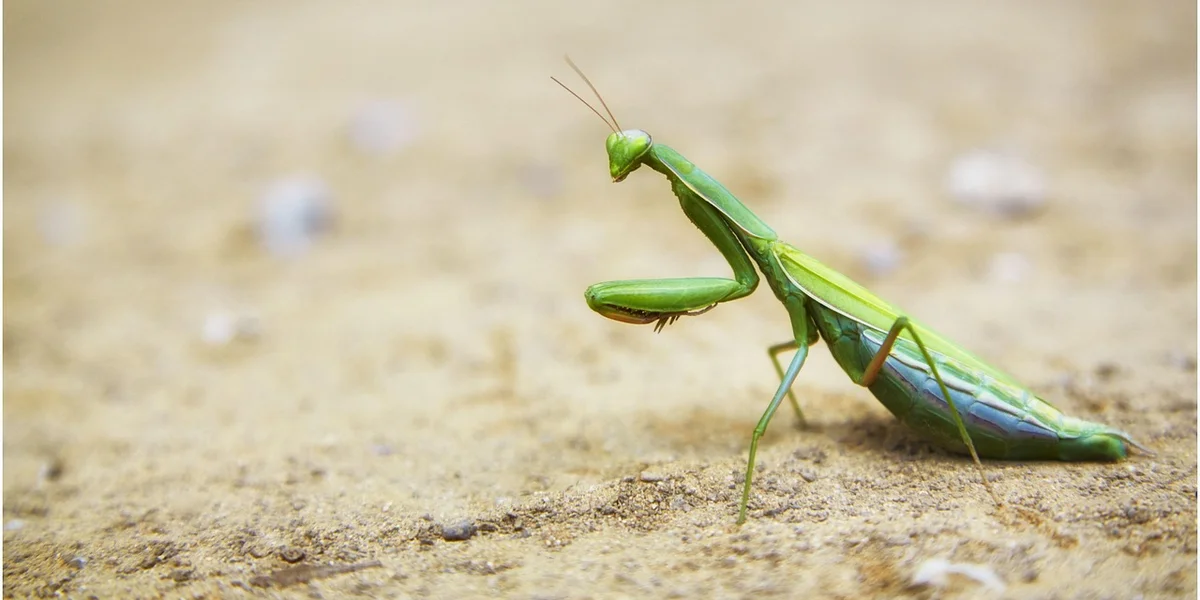
When we wonder if our mantis knows us, we’re really asking about memory and learning. Praying mantises possess a functional memory, but it’s tailored to their insect world—short-term and highly focused on survival. They can hold information for minutes or hours, like the location of a good hunting spot or a safe hideaway after a scare.
This memory supports two key types of animal learning seen in pet mantises. Classical conditioning lets them link your presence with something positive, while operant conditioning helps them learn from the consequences of their own actions. Think of it as their way of building a simple map of what’s safe and what’s rewarding in their tiny realm.
In daily care, this learning shines in small, practical ways. Your mantis may begin to associate the gentle shadow of your hand with feeding time, or the specific vibration of their enclosure opening with the arrival of a cricket. My ghost mantis, Luna, often tilts her head and shifts forward when I approach with the feeding tweezers-a calm, learned anticipation she didn’t show as a nymph.
Do Praying Mantises Have Memory?
Scientific experiments give us clear glimpses into mantis memory. Studies show that mantises can remember visual patterns associated with food for short periods, sometimes up to several hours. In one setup, mantises learned to turn toward a specific shape that reliably promised a snack, demonstrating active recall.
This isn’t like recalling a birthday, but a pragmatic, sensory memory. You can imagine it as your mantis remembering that the curly vine near the top is the perfect launchpad for ambushing flies. It’s a fleeting knowledge of ‘what worked where,’ essential for their solitary lives.
Types of Learning: Conditioning and Adaptation
-
Classical conditioning pairs a neutral event with a meaningful one. For your mantis, your hand (neutral) repeatedly appearing just before a juicy fruit fly arrives (positive) can create a peaceful link. Over time, your approach alone may trigger a calm, attentive posture rather than a defensive strike.
-
Operant conditioning is learning through trial and error. If your mantis slips from a slick branch, it might avoid that perch afterwards. They adapt their behaviour based on direct experience, which is why a well-structured habitat with firm grips is so valuable for their confidence.
-
To build trust, use gentle conditioning in slow, consistent steps. Start by always using the same, slow motion to open the enclosure. Offer food from tweezers at a regular time each day. Be patient; let them observe you without sudden moves. This routine helps forge a positive, familiar association with your presence.
Vision and Sensory Perception: How Mantises See the World
A mantis’s recognition is deeply filtered through its unique senses. Their remarkable compound eyes are superb motion detectors, but they struggle to see fine static details like the features on a human face. Your identity to them is less a portrait and more a collection of moving shapes, familiar scents, and predictable vibrations. Recent studies reveal the true scope of mantis vision: exceptional motion detection, with limited static detail. This helps explain why faces appear as moving silhouettes rather than static portraits.
This vision excels at tracking the slightest twitch of prey, but it has limits. A perfectly still hand might be ‘invisible’ to them until it moves, which is why sudden gestures can startle. Yet, this same sensitivity means they are excellent at noting the rhythm and pattern of your daily interactions.
Beyond sight, other senses fill in the picture. Mantises use smell through sensitive antennae and feel vibrations through their legs and body. The consistent scent of your skin or the particular sound of your voice can become part of the sensory signature they quietly catalogue as ‘not a threat.’
The Role of Compound Eyes in Recognition
Think of their eyes not as cameras, but as a vast array of tiny motion sensors. Each facet in their compound eye captures a piece of the world, creating a mosaic that’s exceptionally good at detecting movement across a wide field of view. It’s why they can spot a fruit fly yards away whilst seeming to stare right through you.
This mechanics directly shape your interactions. Moving slowly and predictably around your mantis allows their vision to process you as a non-threatening part of the environment. My giant Asian mantis, Moss, used to track my hand’s slow arc across the glass-a green statue turning its head, learning the safe pattern of my maintenance routine.
Other Sensory Cues: Smell and Vibration
- Smell (Chemoreception): Mantises ‘taste’ the air with their antennae. The subtle salts and oils on your skin create a scent profile. Over time, this familiar smell, especially when paired with feeding, can signal safety.
- Vibration: They are attuned to subtle tremors. The deep rumble of your voice, the specific tap when you mist the enclosure, or the footsteps approaching their shelf all become recognizable vibrational cues.
- To reinforce these memories, keep handling routines consistent. Use the same hand-wash soap before interactions, speak softly when near them, and try to perform care tasks at similar times each day. This sensory consistency helps your mantis build a composite, familiar sense of you.
Building a Bond: Practical Tips for Pet Mantis Keepers
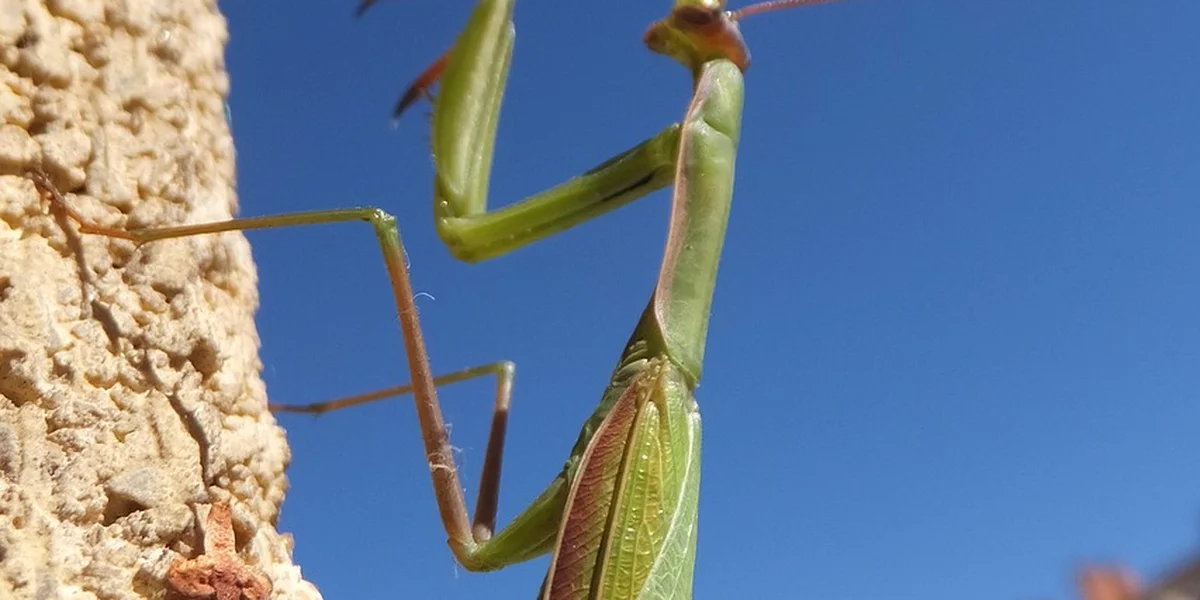
Fostering a sense of familiarity with your mantis revolves around predictable, gentle interactions that respect their innate calm. We build trust not through grand gestures, but through the soft repetition of safe routines, much like the steady drip of water on enclosure leaves.
Safe and Positive Interaction Techniques
These steps help your mantis feel secure during your visits, turning potential stress into neutral or even positive moments.
- Always approach slowly and from the front to avoid startling your mantis. Sudden movements from above mimic predators; a patient, frontal approach lets them track you with those wide, curious eyes.
- Use a soft brush or your hand for gentle coaxing, never grabbing or forcing movement. Let them step onto you voluntarily-I often let my Ghost mantis, Luna, inspect my finger with her antennae before she decides to climb aboard.
- Incorporate feeding into interaction times to create positive associations. Offering a tasty cricket from feeding tweezers during handling can link your presence with a rewarding experience.
Conditioning Your Mantis for Comfort
A simple, consistent routine provides the framework for your mantis to feel at ease in its home environment.
- Outline a daily or weekly rhythm: feed at similar times, mist with warm water for humidity in gentle sprays, and sit quietly for a few minutes of observation.
- Patience is key-building familiarity takes weeks of calm, repeated exposure. My Giant Asian mantis, Moss, became far more exploratory once he learned my evening visits meant a fresh branch or a misting.
- Keep the enclosure in a low-traffic area to minimise vibrations and sudden loud noises, creating a peaceful micro-habitat.
Observing and Interpreting Your Mantis’s Behavior
Learning to read your mantis’s body language is the most rewarding part of care, transforming guesswork into informed connection.
- Comfort signs include relaxed, slowly moving antennae, meticulous grooming sessions, and a curious head tilt when you approach. These show your mantis is content and alert in its surroundings.
- Stress signs are equally clear: frantic climbing, a defensive stance with forearms raised, or consistently refusing food. When you see these, it’s a signal to step back and check the environment for issues like excessive light or low humidity.
- Notice individual quirks-my Orchid mantis, Sprig, always grooms her raptorial arms after eating, a personal ritual that tells me she’s settled.
The Science Behind the Behavior: Insights from Research
Scientific studies peel back the layers on mantis cognition, offering clues that directly shape how we care for them. This research moves us from myth to method, grounding our care in observable, evidence-based practices.
Key Experiments in Mantis Learning and Memory
Controlled studies have revealed surprising capacities in mantis brains, relevant to every keeper’s daily routine.
- Research on predatory cues shows mantises can learn to ignore fake “eyespot” patterns on butterflies after repeated exposure, demonstrating a form of habituation. This means your mantis can get used to non-threatening elements in its tank.
- Memory tests involving visual landmarks prove some species remember safe pathways to retreats or hunting grounds for several days. This spatial memory suggests why a consistent enclosure layout helps your mantis feel oriented and secure.
- Experiments with different prey types indicate mantises assess movement and shape, adjusting their strike strategy-a direct link to why varied, live feeding encourages natural, engaged behavior.
Applying Science to Pet Care: What It Means for You
These findings aren’t just for labs; they translate into simple, effective habits for your home terrarium.
- Use the science of sensory cues to your advantage. Since mantises rely heavily on vision and touch, gentle, predictable interactions help them classify you as a non-threat rather than a predator.
- Understanding their capacity for habituation supports keeping a calm routine-regular misting, feeding, and cleaning times reduce unnecessary stress responses.
- This knowledge empowers you to create a habitat that supports natural cognition, leading to a visibly more relaxed and active pet mantis. It turns care from a chore into a quiet study of a fascinating mind.
Questions from Fellow Mantis Friends
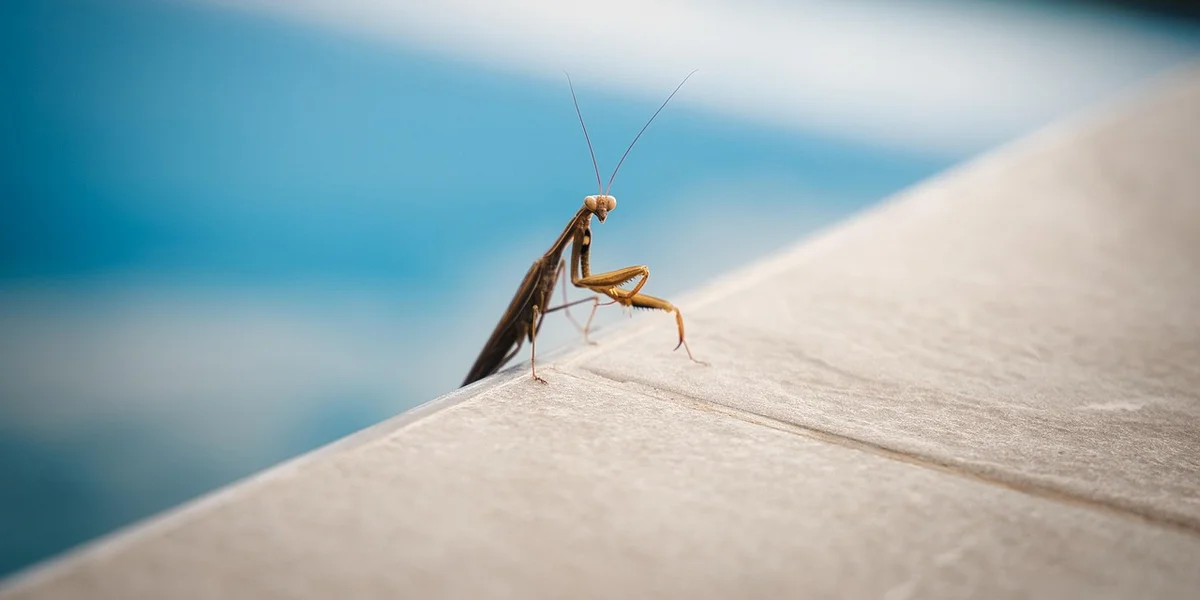
Can praying mantises form bonds with humans?
Praying mantises do not form emotional bonds as social animals do, but they can develop a practical trust through consistent, non-threatening care. This learned familiarity leads to calm behaviors around their keeper, such as reduced defensive reactions. People often ask whether mantises are friendly —the answer lies in temperament, which varies by individual. With that understanding, a keeper who observes body language can interact more calmly and safely.
How do praying mantises interact with humans?
Interactions are driven by sensory cues like movement and vibration, with mantises often responding to routines such as feeding times. Positive engagement involves slow, predictable actions that allow the mantis to associate human presence with safety or food.
What is the level of awareness in praying mantises?
Mantises possess a sharp, immediate awareness focused on survival, processing sensory input to identify prey, threats, or mates. They lack complex consciousness but are highly perceptive of environmental changes, which guides their instinctual behaviors. What makes praying mantises so special are their unique traits. They have raptorial forelegs for catching prey and triangular heads that can rotate to scan their surroundings.
Gentle Insights on Mantis Minds
Your mantis may not know your name, but with consistent, gentle handling, it can learn to see your hand as a source of food rather than a threat. Focus on providing a stress-free habitat and predictable routines, as this thoughtful care fosters a calm insect that is easier to observe and interact with over time.
Responsible mantis keeping means appreciating them as fascinating wild creatures we are privileged to host. We encourage you to stay keen on learning-join online forums, read keeper journals, and let each feeding or molt deepen your understanding of their unique world. For practical care, consult a feeding schedule species comparative guide. It helps you compare feeding intervals and prey preferences across species, so you can tailor your feeding plan to the mantis you keep.
Further Reading & Sources
- Praying Mantis, The Best Pet Insect? Navigate To These …
- r/Entomology on Reddit: How intelligent are Mantises?
- Apparent Motion Perception in the Praying Mantis: Psychophysics and Modelling – PMC
- Is the praying mantis the smartest insect? – Quora
Rowan Hale is a lifelong insect enthusiast who fell in love with mantises for their calm presence, alien elegance, and surprising personalities. After years of keeping and raising a variety of species, Rowan shares practical tips, creative insights, and real-world experience to help others enjoy the quiet magic of mantis care. From setting up the perfect enclosure to understanding their subtle behaviors, Rowan invites readers into a gentle, curious world where every tiny movement feels like a discovery.
Enrichment Activities