
What Are the Most Aggressive Praying Mantis Species to Avoid?
Published on: January 2, 2026 | Last Updated: January 2, 2026
Written By: Rowan Hale
Hello, mantis friend. You might picture these insects as serene, leafy monks, but some carry the spirit of a miniature, six-legged gladiator.
The most aggressive praying mantis species to avoid are typically the larger, Old World varieties, including the Chinese Mantis, African Mantis, and Devil’s Flower Mantis, known for their territorial nature and powerful, defensive strikes.
Yet, ‘aggression’ in mantises is a wonderfully complex dance-it isn’t just about one species being universally fierce. A mantis’s temperament is shaped by its lineage, its sex, and even the world you build for it inside its enclosure.
Here are the key ideas we’ll explore together:
- Which specific species are renowned for their defensive boldness.
- Why a mantis’s sex dramatically influences its behavior.
- How their environment can trigger a defensive stance.
- The real risks of handling a truly defensive individual.
Meet the Mantis Species with Feisty Temperaments
Aggressive Mantis Species to Steer Clear Of
We often find that certain mantis species have a reputation for being quite spirited, which can catch new keepers off guard. Handling these feisty types requires a calm approach and plenty of prior experience to avoid stress for both you and your mantis. Knowing how to deal with aggressive or defensive praying mantises is crucial.
- Chinese Mantis (Tenodera sinensis): Growing up to 10 centimetres, they sport slender green or brown bodies and are known for their rapid strikes. Beginners might struggle with their defensive nature, as they can bite when feeling threatened.
- Giant Asian Mantis (Hierodula membranacea): Reaching lengths of 12 centimetres, these vibrant green insects are territorial and quick to defend their space. Their size means a nip can be more noticeable, making them less suited for first-time owners.
- African Mantis (Sphodromantis species): Often medium to large, with colours ranging from green to brown, they are highly defensive and may hiss when disturbed. Their aggressive feeding responses can startle those unfamiliar with mantis care.
Why Some Large Mantis Species Pose More Risk
Larger mantises, like the Giant Asian, have stronger mandibles and a greater sense of territory, which can lead to more intense defensive actions. My male Moss, a Giant Asian mantis, would often react to sudden movements by lunging forward, a clear sign that bigger species perceive even gentle intrusions as threats. Their increased size means they can deliver a sharper bite, and their heightened awareness makes them quick to guard their enclosures. We’ve noticed that whilst smaller mantises might retreat, larger ones are more likely to stand their ground, which is why we recommend observing from a distance until you’re confident in their behaviour.
Recognizing Aggressive Behavior in Your Pet Mantis
Common Signs of Mantis Aggression
Spotting aggressive cues early helps you respond calmly and keep your mantis content. Watch for subtle body language changes, as these often signal that your mantis is feeling defensive or stressed.
- Threat Display: Raising and spreading their forelegs wide, much like a boxer’s stance, to appear larger and more intimidating.
- Rapid Strikes: Quick, darting movements with their arms to grab or fend off perceived dangers, even towards non-prey items.
- Hissing Sounds: Some species, like the African mantis, produce a soft hiss by expelling air, a clear warning to back away.
- Puffed-Up Body: Inflating their abdomen and thorax to look bulkier, often accompanied by a stiff, alert posture.
How Defensive Behavior Differs Among Species
Aggression varies widely between mantis types, influenced by their natural habitats and survival strategies. For instance, the European mantis tends to hold its ground with bold threat displays, whilst the Dead leaf mantis relies on stealth and sudden strikes from camouflage. In our experience, European mantises might raise their arms and sway slowly to ward off intruders, whereas Dead leaf mantises remain perfectly still until the last second, then lunge without warning. This diversity means that understanding your specific species’ tendencies is key to anticipating and respecting their boundaries.
What Triggers Aggression in Pet Mantises?
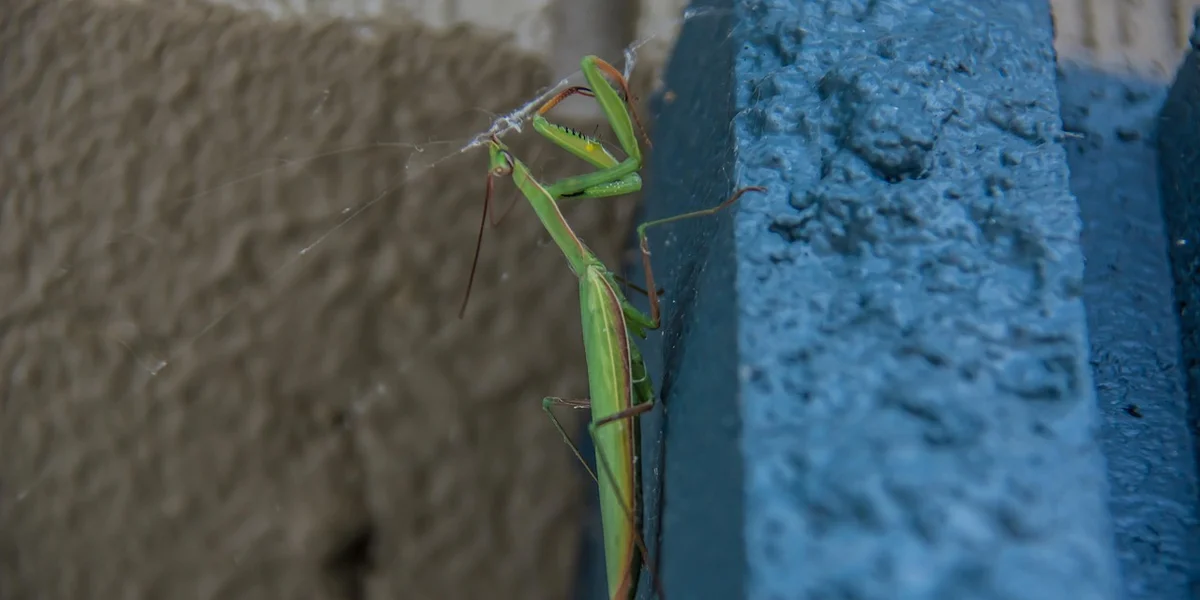
Environmental Factors That Heighten Aggression
Your mantis’s home setup plays a huge role in shaping its mood. Even small changes in temperature or space can transform a calm mantis into a defensive one. We’ve seen our own mantises react strongly when their environment feels off, which is one of the signs of a stressed praying mantis.
- Temperature extremes: Too hot makes mantises hyperactive and irritable, while too cold slows them down, making them more defensive when disturbed.
- Cramped enclosures: Insufficient space triggers territorial behavior. Mantises need room to hunt, molt, and perch without feeling cornered.
- Incorrect humidity: Low humidity causes stress during molting, leading to frantic, aggressive movements as they struggle to shed their skin.
- Poor ventilation: Stagnant air increases stress levels, making mantises more likely to strike at anything moving near them.
- Bright, direct lighting: Harsh light creates constant alertness, putting mantises in a perpetual state of high-strung readiness.
The Role of Hunger and Cannibalism
A hungry mantis is an opportunistic predator that sees everything as potential food. Regular, adequate feeding is your best defense against cannibalistic behavior. Our male Giant Asian, Moss, once tried to nibble a paintbrush when we were a day late with his crickets—so even when you feed regularly, it’s a good idea to monitor them closely.
Prevent hunger-related aggression with these steps:
- Feed adults every 3-4 days, juveniles every 2-3 days
- Offer appropriately sized prey (no larger than the mantis’s head)
- Remove uneaten prey within hours to reduce stress
- Never house mantises together after their third molt
- Use feeding tongs to avoid mistaken finger strikes
Mating Aggression: When Females Turn Fierce
The famous “mantis eating mate” scenario isn’t inevitable, but the risk is real. Female mantises become particularly defensive during their receptive period, viewing any movement as either threat or food. Our Orchid mantis, Sprig, once spent three days in a striking pose before mating.
Females are most aggressive when they’re well-fed but hormonally primed for reproduction. Species like Orchid mantises show heightened aggression due to their specialized hunting instincts. Always introduce males carefully and have a separation plan ready.
Species Spotlight: High-Risk Mantises for Beginners
Chinese Mantis and Giant Asian Mantis
These common species pack surprising punch for their size. Both species grow large enough to deliver painful bites and will readily strike at moving objects. Our Giant Asian, Moss, once chased a cricket for ten minutes across his enclosure with relentless determination.
- Chinese Mantis: Reaches 4-5 inches, known for territorial defense and strong hunting instincts
- Giant Asian Mantis: Grows to 3-4 inches, exhibits fast strikes and persistent chasing behavior
- Both species require experienced handling and larger, secure enclosures
- Their size means bites can break human skin, though not dangerously
- Show reduced tolerance for frequent interaction or enclosure changes
Other Species with Noteworthy Aggression
Some mantises combine camouflage with quick tempers. Dead leaf mantises blend perfectly until they explode into motion, often startling new keepers. Their defensive posture includes spreading wings and striking repeatedly. These tactics illustrate how mantises defend themselves. The defense mechanisms behind these moves are explained further.
Indian flower mantises appear delicate but possess lightning-fast reflexes. Their hunting style involves sudden, unpredictable lunges that make them challenging to feed safely. These species often refuse food unless it’s moving, requiring live prey and careful placement. In a praying mantis feeding schedule comparative guide, these traits help illustrate how feeding cadence and prey choices vary across species. This context can guide hobbyists and researchers in planning feedings and comparing species.
We recommend starting with calmer species like Ghost mantises before considering these more temperamental varieties. Their combination of camouflage and quick strikes makes them better for observation than interaction.
Tips for Managing Aggression in Pet Mantises
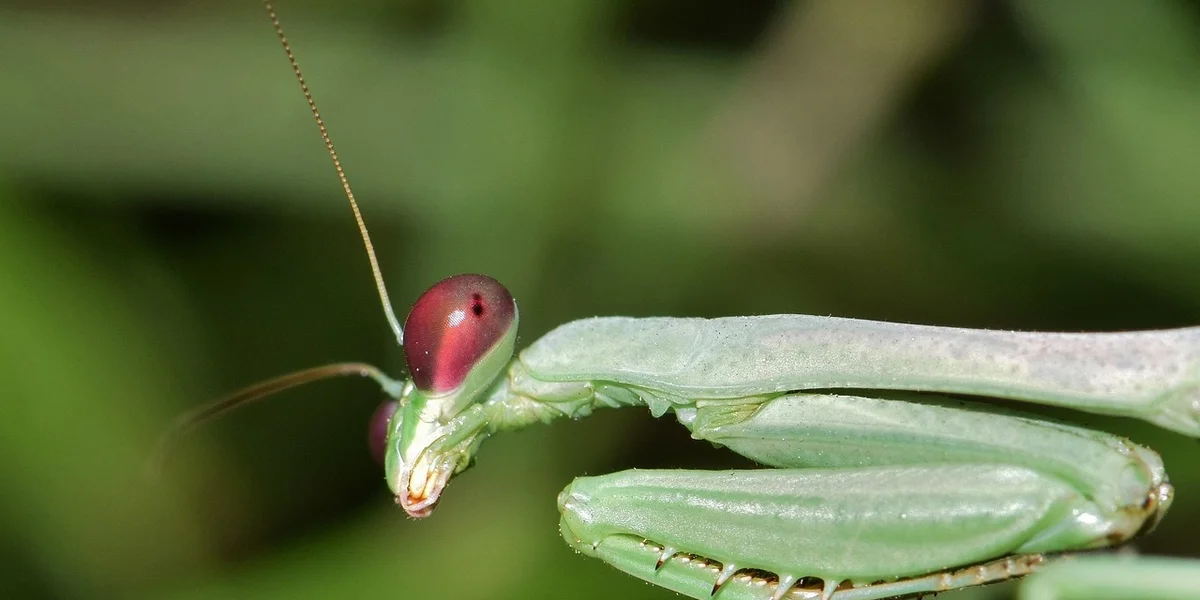
Reducing Aggression Through Proper Care
Start by setting up a spacious enclosure that mimics their natural habitat. A tall, well-ventilated tank with plenty of vertical climbing space helps your mantis feel secure and less defensive. We use live plants and twigs to create hiding spots, which reduce stress and prevent aggressive behaviors. A calm environment with proper perches can make even a feisty mantis like Moss settle down more quickly. By prioritizing a naturalistic safe habitat for your praying mantis, you support its instinct to explore while staying calm. A thoughtfully designed enclosure that mimics the wild can reduce stress and promote peaceful behavior.
- Choose an enclosure that is at least three times the mantis’s length in height for ample room to move and hunt.
- Maintain humidity levels between 50-70% with daily misting using lukewarm water to keep the air moist and comfortable.
- Feed your mantis on a regular schedule, offering prey like fruit flies or small crickets every 2-3 days to curb hunger-driven aggression.
- Handle your mantis gently by allowing it to walk onto your hand slowly, avoiding sudden movements that might startle it.
From our experience with Luna, her slow, deliberate movements taught us that patience during handling builds trust over time. Consistent feeding and a stable home environment are key to soothing an aggressive mantis.
When to Avoid Handling Certain Species
Some mantis species are more prone to aggression in specific situations, and knowing when to step back keeps both you and your pet safe. Ghost mantises, for instance, can become skittish if disturbed during sensitive times. When you know how to read their mood, you can tell if a mantis is stressed and adjust your handling accordingly. Quick changes in posture or movement usually indicate rising tension. Always observe your mantis’s body language for signs of stress, like raised forelegs or rapid movements.
- Avoid handling during molting periods, as the mantis is vulnerable and may strike out of fear.
- Steer clear after feeding, when they are focused on digestion and more likely to be defensive.
- Skip handling if the mantis is in a threat posture, such as spreading its wings or lunging forward.
- Refrain from disturbing species like the Ghost mantis in low-light conditions, as they rely on camouflage and can be easily startled.
We learned this the hard way with Sprig, who once retreated for days after an untimely interaction. Respecting their space during these moments fosters a happier, less aggressive pet.
Gentle Alternatives: Peaceful Mantis Species for Your Home
Recommended Species for a Calm Experience
If you prefer a more tranquil companion, consider species known for their docile nature. These mantises are ideal for beginners or those seeking a low-stress pet-keeping experience. Choosing a gentle species like the Carolina mantis can turn your terrarium into a serene, observation-friendly space.
- Carolina mantis: Native to North America, they are hardy, slow-moving, and rarely show aggression, making them perfect for hands-on interaction.
- Ghost mantis: With delicate, leaf-like appearances, they are timid and prefer to hide, offering a peaceful presence without the risk of sudden strikes.
- Indian flower mantis: Known for their vibrant colors and calm demeanor, they thrive in communal setups and are less likely to lunge.
- European mantis: A common choice, they adapt well to handling and display minimal defensive behaviors in a well-maintained enclosure.
Luna, our Ghost mantis, spends her days perched quietly, reminding us how a peaceful species enriches the daily routine. These alternatives provide all the fascination of mantis-keeping without the worry of aggression.
Why Choosing the Right Mantis Matters
Selecting a species that matches your lifestyle and comfort level transforms your pet-keeping journey from stressful to soothing. A calm mantis encourages more bonding and observation, while an aggressive one might lead to frustration. We’ve found that starting with a gentle species builds confidence and deepens your appreciation for these intricate insects.
When Moss, our Giant Asian mantis, was younger, his energetic nature required careful management, whereas Luna’s tranquility made her a joy from day one. Your choice shapes not just the care routine, but the overall harmony of your home environment.
Questions from Fellow Mantis Friends
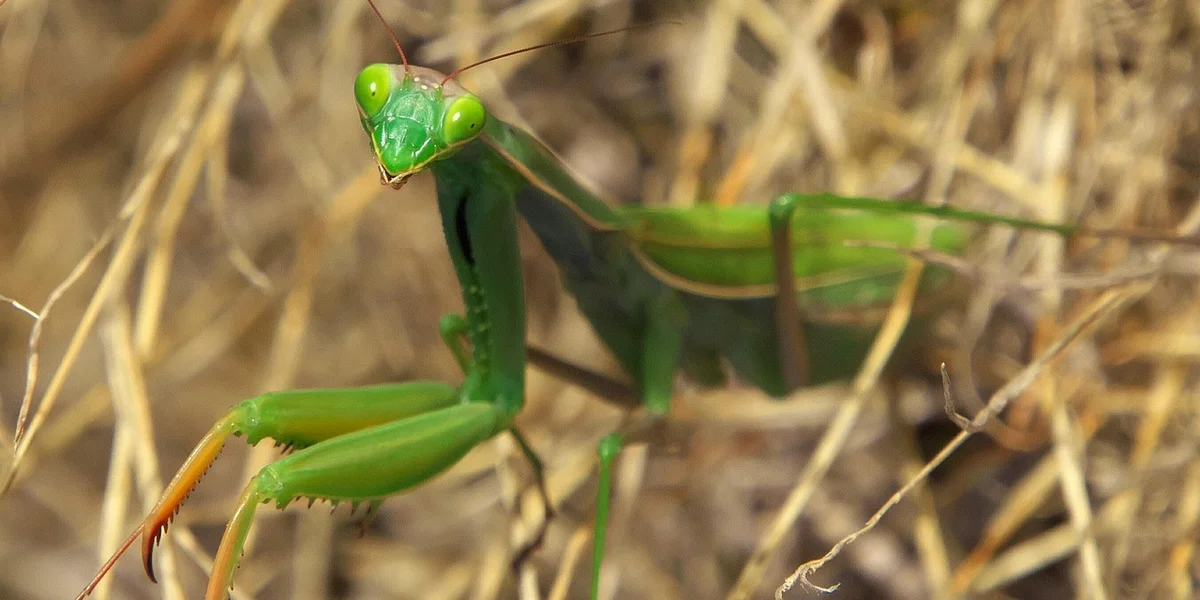
Do male mantises exhibit aggression during courtship?
Male mantises generally do not show aggression during courtship, as their main goal is to approach females cautiously to mate. Instead, they rely on slow, deliberate movements to avoid triggering defensive responses from the female. This careful approach is especially important when introducing a male and female mantis for breeding.
Are young mantises more aggressive than adults?
Young mantises, or nymphs, are often more skittish and defensive due to their small size and higher vulnerability to predators. Praying mantises are predators themselves, relying on ambush and swift strikes to catch prey. This predatory lifestyle helps explain their defense and aggression patterns in the nymph stage. As they grow and molt, their aggression may stabilize or change based on species and environmental conditions.
Is predation risk linked to aggression in mantises?
Yes, mantises in high-predation environments often display increased aggression as a survival tactic to deter threats. In captivity, minimizing stress from perceived dangers can help reduce defensive behaviors.
A Gentle Keeper’s Final Note
We have explored mantises with formidable reputations, from the striking Idolomantis diabolica to the lightning-fast Hierodula majuscula. Choosing a species that matches your experience level is the kindest first step you can take for both yourself and your future pet. For beginners, that means selecting a hardy, beginner-friendly mantis with straightforward care. Picking the right species early makes learning and keeping your new pet much more rewarding.
Responsible mantis keeping is a continuous journey of observation and learning. Your dedication to understanding their unique needs is what transforms simple care into a truly rewarding partnership.
Further Reading & Sources
- Praying Mantis: Predator-Prey Interactions, Fights, and Aggressive Behaviors | Animal Matchup
- most aggressive mantis? | Mantid Forum – Mantis Pet & Breeding Forum
- What Is The Most Aggressive Praying Mantis? – School Of Bugs
- Praying Mantises: More Deadly Than We Knew – The New York Times
Rowan Hale is a lifelong insect enthusiast who fell in love with mantises for their calm presence, alien elegance, and surprising personalities. After years of keeping and raising a variety of species, Rowan shares practical tips, creative insights, and real-world experience to help others enjoy the quiet magic of mantis care. From setting up the perfect enclosure to understanding their subtle behaviors, Rowan invites readers into a gentle, curious world where every tiny movement feels like a discovery.
Predatory Threats