
Praying Mantis vs Grasshopper: Key Differences Explained
Hello fellow insect lover! Have you ever spotted a long-legged insect in your garden and wondered whether it was a graceful mantis or a springy grasshopper? These two creatures often share the same green spaces, yet they lead entirely different lives.
The core difference lies in their roles: mantises are stealthy predators that hunt live prey, while grasshoppers are herbivorous plant-eaters that primarily eat leaves and grasses. Though they may look somewhat similar at first glance, their bodies, behaviors, and life strategies are worlds apart.
Distinguishing them involves more than just noting color or size. You’ll need to observe their posture, leg shape, and even how they move. To help you tell them apart with confidence, here are the key takeaways:
- Mantises have triangular heads and grasping forelegs; grasshoppers have rounded heads and jumping hind legs
- Mantises are carnivorous hunters; grasshoppers are vegetarians
- Mantises move slowly and deliberately; grasshoppers are quick and hop frequently
- Mantis wings are often held folded like a cloak; grasshopper wings are typically longer and lie flat
Physical Anatomy: Spotting the Key Differences
Leg and Limb Structures
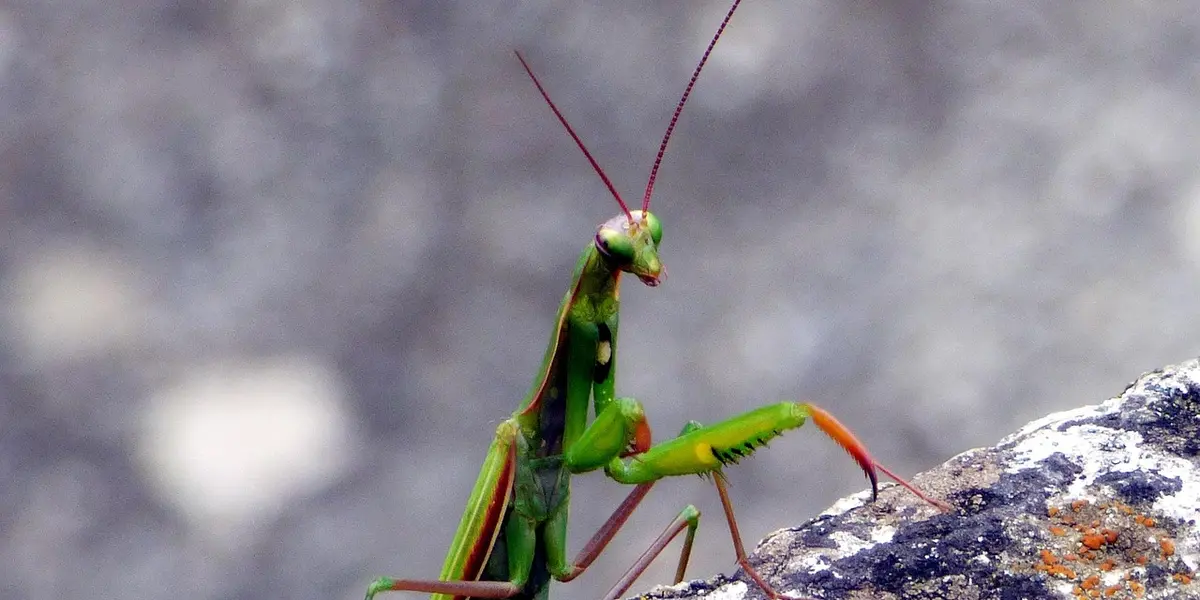
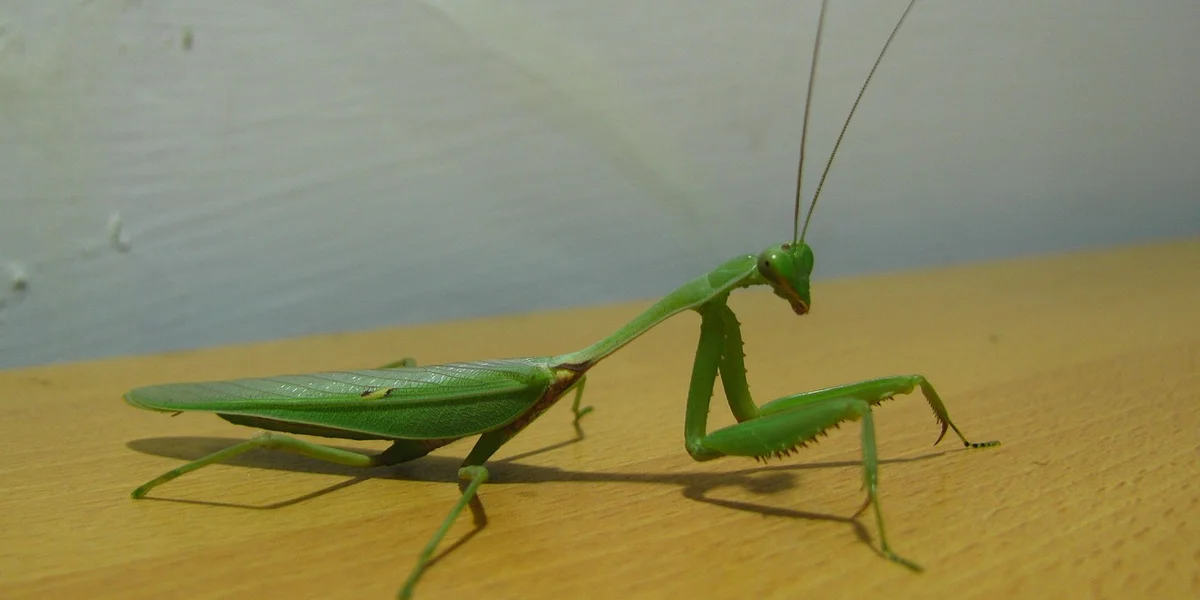
Praying mantises sport raptorial forelegs that fold like tiny, spiny traps, perfect for snatching live prey in a flash. These specialized limbs act as swift, grasping tools that mantises rely on for every meal. Grasshoppers, in contrast, have powerful hind legs built for leaping away from danger, with smoother forelegs used for walking and climbing. When Moss, my Giant Asian Mantis, hunts, his forelegs dart out with precision, while a grasshopper’s legs are all about explosive jumps. From perches at varying heights, they hunt by judging depth to time their strike. This hunting behavior—patient, stealthy, and highly dependent on depth perception—shapes how they pursue prey. We often see mantises carefully clean their forelegs after eating, a gentle grooming habit that highlights their predator nature.
- Mantis forelegs: Foldable, spiny, and designed for grabbing insects mid-air.
- Grasshopper hind legs: Muscular and elongated, ideal for quick escapes.
- Foreleg functions: Mantises use them like arms; grasshoppers for stability.
Head and Eye Arrangement
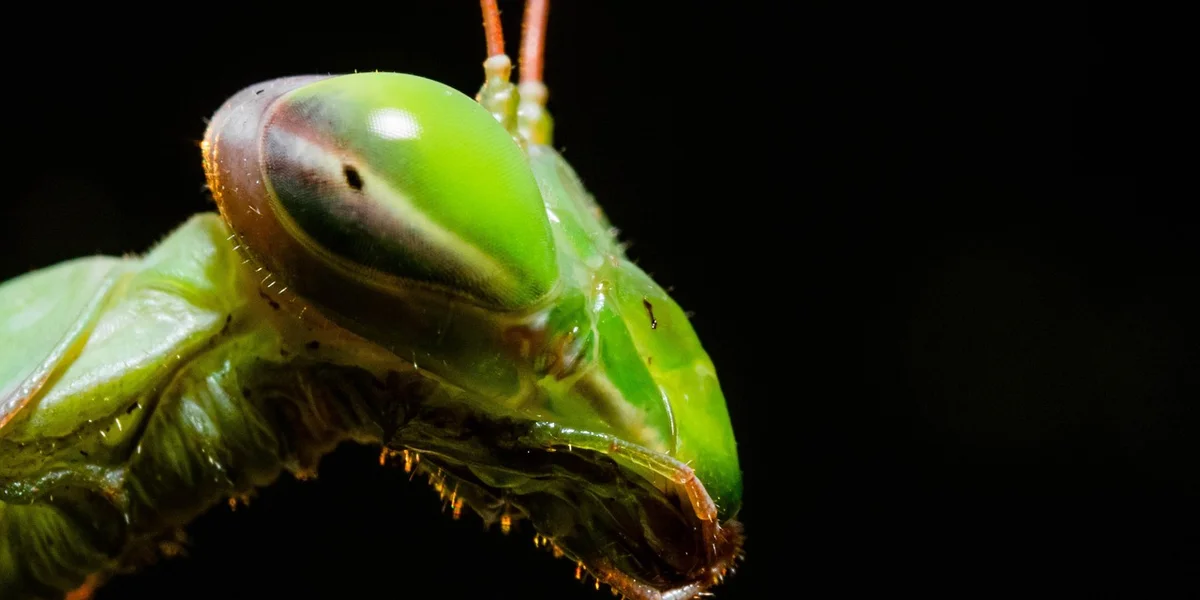
A praying mantis boasts a triangular head that swivels almost full circle, giving them an eerie, watchful presence. Their large, compound eyes provide superb depth perception, essential for judging distances during a strike. Grasshoppers have more rounded heads with eyes positioned on the sides, offering a wider field of view to spot threats. Luna, my Ghost Mantis, often tilts her head as if pondering her next move, a behavior you will not see in grasshoppers. This head mobility lets mantises track prey without moving their bodies, a stealthy advantage in their daily routines. Beyond head mobility, mantises also rely on sudden jumps and, when wings are present, short flights to reposition or escape. These jump and fly movement abilities are explained next.
- Mantis head: Triangular and highly mobile, with forward-facing eyes.
- Grasshopper head: Oval-shaped, with lateral eyes for peripheral vision.
- Eye function: Mantis eyes detect motion in 3D; grasshopper eyes monitor for predators.
Behavior and Daily Habits: Predator vs Herbivore
Hunting and Feeding Styles
Praying mantises are patient ambush predators, waiting motionless for hours before pouncing on unsuspecting insects. They consume their prey alive, starting with the head to quickly immobilize it. Grasshoppers, as herbivores, spend their days munching on leaves and grasses, often in groups. We have watched Sprig, my Orchid Mantis, remain perfectly still until a fruit fly wanders too close, then she strikes with quiet efficiency. This hunting style means mantises need live food, whilst grasshoppers thrive on plant-based diets you can easily provide from your garden. Mantises prey on a wide, often surprisingly comprehensive range of insects. A typical list includes flies, crickets, moths, beetles, grasshoppers, and aphids.
- Mantis feeding: Ambush tactics, carnivorous, requires live insects like crickets.
- Grasshopper feeding: Grazing on plants, often in daylight hours.
- Feeding frequency: Mantises eat less often but in larger meals; grasshoppers nibble throughout the day.
Movement and Camouflage
Mantises move with slow, deliberate steps, blending into their surroundings like living statues to avoid detection. Their camouflage mimics leaves or flowers, making them nearly invisible to both prey and predators. Grasshoppers rely on quick, erratic jumps and color matching to hide in grasses, but they are more active and noisy. In our terrariums, Moss might sway gently in the breeze, imitating a twig, whilst a grasshopper would likely hop away at the first sign of disturbance. This difference in movement reflects their roles: one as a hidden hunter, the other as a vigilant grazer.
- Mantis movement: Stealthy and slow, with swaying motions for disguise.
- Grasshopper movement: Fast jumps and flights, often with audible clicks.
- Camouflage purpose: Mantises use it for hunting; grasshoppers for defense.
Diet and Nutrition: What They Eat and Why It Matters
Mantis Feeding Routines
A praying mantis is a dedicated carnivore, viewing its world through a hunter’s lens. Their diet consists entirely of live, moving prey, which triggers their instinct to strike with lightning speed. We feed our mantises every few days, offering prey no larger than the space between their forearms.
You will see a fascinating feeding ritual. Our Ghost Mantis, Luna, watches a fruit fly with intense focus before her head tilts and she snatches it from the air. Providing the right size and type of live food is critical for their health and to prevent injury during feeding. A varied diet of flies, moths, and small crickets ensures they receive a full spectrum of nutrients.
- Primary Food: Live insects like fruit flies, houseflies, and small crickets.
- Feeding Frequency: Every 2-4 days for adults; more often for growing nymphs.
- Hunting Method: Ambush predators that rely on stealth and precision.
- Water Source: They drink water droplets from misted enclosure walls and leaves.
Grasshopper Dietary Needs
Grasshoppers are the gentle grazers of the insect world, thriving on a simple plant-based menu. They are herbivores, spending their days chewing on fresh grasses, leaves, and various vegetables. Their powerful jaws are perfectly adapted for grinding down tough plant material.
Unlike a mantis, a grasshopper does not hunt. It forages. You will find them methodically moving from leaf to leaf. A constant supply of fresh, pesticide-free greenery is non-negotiable for their survival and digestion. They can consume a surprising amount of vegetation relative to their size.
- Primary Food: Fresh grasses, lettuce, spinach, and other leafy greens.
- Feeding Frequency: They require access to food daily.
- Foraging Method: Active feeders that roam to find suitable plants.
- Water Source: They get most of their moisture from the fresh plants they eat.
Lifecycle and Growth: From Nymph to Adult
Mantis Lifecycle Stages
A mantis undergoes incomplete metamorphosis, a remarkable journey with distinct phases. They hatch from a foamy egg case called an ootheca, emerging as tiny, wingless replicas of the adults known as nymphs. This incomplete metamorphosis is an ancient evolutionary strategy that keeps growth tied to hunting skills through molts. Our Moss started life this way, a miniature emerald hunter no bigger than a grain of rice.
Nymphs will molt, or shed their exoskeleton, several times as they grow. Each successful molt brings them closer to adulthood, often marked by the full development of their wings. This process is incredibly vulnerable; they hang upside down and must not be disturbed. The old skin splits, and a softer, larger mantis carefully steps out.
- Egg: Laid in a protective ootheca, often on twigs or cage mesh.
- Nymph: Hatches and begins hunting immediately, molting 6-10 times.
- Subadult: The final stages before the adult molt, wings developing.
- Adult: Fully winged and sexually mature, capable of reproduction.
Grasshopper Development
Grasshoppers also experience incomplete metamorphosis, but their growth tells a different story. They hatch from eggs buried in the soil, appearing as miniature, wingless versions of their parents called hoppers. Their focus from day one is on eating and growing to prepare for their molts.
You can observe them shedding their skin to accommodate their rapidly increasing size. Wings develop gradually with each successive molt, becoming fully functional only in the final adult stage. Their development is generally faster than a mantis’s, driven by their constant consumption of vegetation.
- Egg: Deposited in the soil in a pod-like cluster.
- Nymph (Hopper): Emerges and begins feeding on plants, molting 5-6 times.
- Wing Development: Wing buds appear and enlarge with each molt.
- Adult: Possesses fully formed wings for flight and is reproductively mature.
Suitability as Pets: Care and Handling Insights
Enclosure and Habitat Setup
Setting up a home for a praying mantis feels like crafting a miniature jungle gym. Mantises thrive in tall, well-ventilated enclosures with mesh sides for climbing, as they love to perch high and survey their domain. We use containers at least three times the mantis’s height, adding twigs, artificial plants, and a secure lid to prevent escapes. Humidity is key—daily misting with warm water keeps their skin soft during molts, much like the gentle dew in a morning garden.
Grasshoppers, on the other hand, prefer wide, horizontal spaces with loose substrate for burrowing or egg-laying. Their enclosures need ample room for hopping and grazing, with fresh greens and a dry area to avoid mold. While mantises enjoy a humid, leafy environment, grasshoppers do better in drier setups that mimic open fields. For my Ghost Mantis Luna, I’ve found a simple mason jar with a mesh top works wonders, but grasshoppers demand more floor space to feel at ease.
- Mantises: Vertical orientation, climbing surfaces, 60-80% humidity, and temperatures around 22-28°C.
- Grasshoppers: Horizontal space, substrate for digging, lower humidity, and access to live plants for food.
- Both need clean water sources, but mantises drink droplets from leaves, while grasshoppers may sip from shallow dishes.
Handling and Temperament
Handling a mantis is a quiet dance of trust-they often step onto your finger with slow, deliberate movements. Mantises are generally calm and can be handled gently, especially if you approach from the front and avoid sudden gestures. My Giant Asian Mantis, Moss, will curiously explore my hand for minutes, tilting his head as if studying every detail. They rarely bite unless threatened, and their grip is light, like a tiny leaf clasping your skin.
Grasshoppers, in contrast, are skittish and prone to jumping away when approached. Their temperament is flighty, making handling stressful for both you and the insect, so it’s best to observe them from a distance. While mantises might sit still for photos or gentle strokes, grasshoppers prefer to hide or leap, which can lead to injuries if they hit enclosure walls. We always wash hands before and after handling to keep our tiny friends safe from oils or residues.
- For mantises: Use a soft brush or your hand to encourage stepping up; support their body to prevent falls.
- For grasshoppers: Limit handling to necessary tasks like enclosure cleaning; use a net or container to move them safely.
- Watch for signs of stress: mantises may sway or raise forelegs, while grasshoppers might chirp loudly or attempt escapes.
Common Myths and Visual Confusions
Size and Coloration Comparisons
Many people mix up mantises and grasshoppers due to their green hues and leggy appearances, but a closer look reveals stark differences. Mantises often have slender, elongated bodies with raptorial forelegs folded in a “praying” pose, perfect for snatching prey. They range from tiny species like the Ghost Mantis to larger ones like the Giant Asian, with colors that mimic leaves or flowers — my Orchid Mantis Sprig blends into pink petals effortlessly. Their color patterns aren’t just decorative; they help mantises blend into leaves and flowers, aiding camouflage and mimicry. Does this color-based camouflage really boost their survival?
Grasshoppers boast robust, compact bodies with powerful hind legs built for jumping, and their coloration tends toward solid greens or browns for camouflage in grass. While both use camouflage, mantises are masters of deception as ambush predators, whereas grasshoppers rely on it to avoid being eaten. In size, adult mantises can grow up to 15 cm, but grasshoppers often stay smaller, around 2-7 cm, depending on the species. This visual mix-up can lead to misidentification in gardens, where mantises are beneficial pest controllers and grasshoppers are often plant-munchers.
- Mantises: Triangular heads, large eyes, and forelegs with spines for grasping.
- Grasshoppers: Rounded heads, shorter antennae, and hind legs adapted for leaping.
- Coloration: Mantises may shift shades with molts; grasshoppers usually have consistent patterns.
Sound and Communication
In the world of insect sounds, mantises are the quiet observers, while grasshoppers are the chatterboxes of the field. Mantises communicate primarily through body language, like swaying to mimic leaves or raising forelegs in a defensive display, and they produce no audible sounds. I’ve spent hours watching Luna remain silent as a statue, her movements speaking volumes in the still air of her enclosure.
Grasshoppers, however, fill the air with rhythmic chirps and clicks through stridulation-rubbing their legs or wings together. This sound-making is used for mating calls or warnings, adding a lively backdrop to their habitats but making them less ideal for quiet indoor pets. If you keep grasshoppers, expect a symphony on warm days, whereas mantis care is a hushed, meditative experience. We find this difference highlights how mantises suit calm, observant owners, whilst grasshoppers appeal to those who enjoy nature’s noises.
- Mantises: Silent; rely on visual signals and touch.
- Grasshoppers: Vocal; use sounds for communication, which can be loud in enclosed spaces.
- Impact on pet keeping: Mantises are peaceful companions; grasshoppers may disturb quiet environments.
Common Mantis Queries
In a fight between a mantis and a grasshopper, who would win?
A praying mantis would almost always win a confrontation with a grasshopper. Its role as a specialized predator with rapid, grasping forelegs gives it a decisive advantage over the herbivorous grasshopper. In a garden, that predation can help keep pest populations in check. Mantises are often regarded as beneficial garden predators, though they may also eat non-pest insects.
How do mantis and grasshopper sizes compare?
While some large grasshopper species can rival mantises in length, their body structures are very different. A mantis has a long, slender thorax and abdomen, whereas a grasshopper has a more robust and compact build.
Do praying mantises make sounds like grasshoppers?
No, praying mantises are generally silent and do not produce audible sounds like the chirping of grasshoppers. Grasshoppers create sound through stridulation, a method mantises lack. Praying mantises are insects—popularly called bugs in everyday language. They’re a distinctive example of an insect with a keen predatory instinct.
Your Mantis Care Journey Starts Here
Recognising that mantises are carnivorous hunters needing live prey and tailored enclosures sets them apart from grasshoppers’ plant-based diets. Focusing on these distinctions helps you create a safe, enriching home where your mantis can thrive.
We urge you to embrace the role of a thoughtful keeper by continually exploring mantis behaviour and care techniques. Staying informed and observant allows you to nurture a healthy, content mantis through every life stage.
Further Reading & Sources
- r/whatsthisbug on Reddit: I CAN’T FIGURE OUT IF IT’S A GRASSHOPPER OR A MANTIS AND IT’S DRIVING ME CRAZY
- Praying Mantis versus Grasshopper – Crazy for Gardening
- Grasshopper Vs Mantis | TikTok
- What is the difference between a mantis and a grasshopper? – Difference Digest
Rowan Hale is a lifelong insect enthusiast who fell in love with mantises for their calm presence, alien elegance, and surprising personalities. After years of keeping and raising a variety of species, Rowan shares practical tips, creative insights, and real-world experience to help others enjoy the quiet magic of mantis care. From setting up the perfect enclosure to understanding their subtle behaviors, Rowan invites readers into a gentle, curious world where every tiny movement feels like a discovery.
Common Species