
Do Praying Mantises Need UVB Lighting?
Hello mantis friend, have you ever watched your little hunter sit perfectly still, its delicate limbs poised as if in a gentle green trance under the soft glow of room light? That quiet observation often leads us to wonder if our mantis companions need something more from their environment, like specialized UVB rays.
In most cases, praying mantises do not require UVB lighting to stay healthy, as they obtain essential nutrients from their prey rather than relying on sunlight.
Yet, this topic isn’t a simple yes-or-no matter, and factors like species origin and enclosure setup can add subtle layers to the discussion. We’ll walk through the nuances together, drawing from hands-on experience to help you feel confident in your care choices.
Here are the key points we’ll cover:
- Why most mantises thrive without UVB and how their diet fills the gap
- Exceptions for certain species and what to watch for in their behavior
- Safe, natural ways to provide light and warmth without UVB risks
- Personal insights from keeping mantises like Luna and Moss in varied setups
Do Praying Mantises Require UVB Lighting?
Praying mantises do not require UVB lighting to survive or thrive in captivity. Unlike reptiles that need UVB rays to synthesize vitamin D3 and properly metabolize calcium, mantises acquire all necessary nutrients directly from their prey. This fundamental biological difference means your mantis won’t suffer metabolic bone disease without specialized lighting.
In their natural habitats, mantises experience filtered sunlight through vegetation rather than direct exposure. Wild mantises spend most days hidden among leaves and stems, receiving brief periods of dappled light rather than sustained UVB radiation. Our indoor enclosures actually mimic these sheltered conditions quite well without additional lighting equipment. Keepers should avoid common lighting, heating, and humidity mistakes—like overly bright direct light, uneven heat, or air that’s too dry. With a steady indirect light cycle, consistent temperatures, and moderate humidity, mantises thrive in home setups.
Some species may show subtle behavioral responses when provided with low-level UVB exposure:
- Ghost mantises (Phyllocrania paradoxa) often become more active
- Orchid mantises (Hymenopus coronatus) may display enhanced coloration
- Giant Asian mantises (Hierodula membranacea) sometimes show improved hunting accuracy
- Devil’s flower mantises (Idolomantis diabolica) might demonstrate more natural basking behavior
How Praying Mantises Perceive and Use UVB Light
Mantises possess remarkable compound eyes that detect ultraviolet wavelengths invisible to humans. Their vision encompasses a broader spectrum than ours, allowing them to see UV patterns on flowers and potential prey that we completely miss. This extra visual information helps them distinguish details in their environment that would otherwise blend together. Researchers are still unraveling how mantises perceive color. Understanding their color vision helps explain how they use hue and pattern to locate prey and navigate their surroundings.
UVB exposure appears to influence diurnal activity patterns in some species. Mantises kept under full-spectrum lighting often maintain more consistent day-night cycles and demonstrate sharper hunting responses. The UV component seems to help regulate their internal clocks and boost alertness during daylight hours.
We’ve observed interesting behavioral connections in our own mantis care. Our male Giant Asian mantis, Moss, becomes particularly curious and exploratory when his enclosure receives morning sunlight through a window. He’ll often reposition himself to catch the gentle warmth and light, showing clear preference for these brief natural sessions over artificial lighting alone.
During mating seasons, some species demonstrate heightened sensitivity to lighting conditions. Female orchid mantises may use UV cues to assess potential mates, while males might rely on ultraviolet markers to locate females amid dense foliage. These subtle visual cues could explain why breeding success sometimes improves with access to naturalistic lighting.
Hunting efficiency often increases under full-spectrum conditions. The UV reflection from insect wings creates higher contrast against backgrounds, making flying prey significantly easier for mantises to track and capture. This visual advantage explains why some keepers report faster feeding responses when using lights that include UV components.
UVB Lighting Effects on Mantis Health and Behavior
-
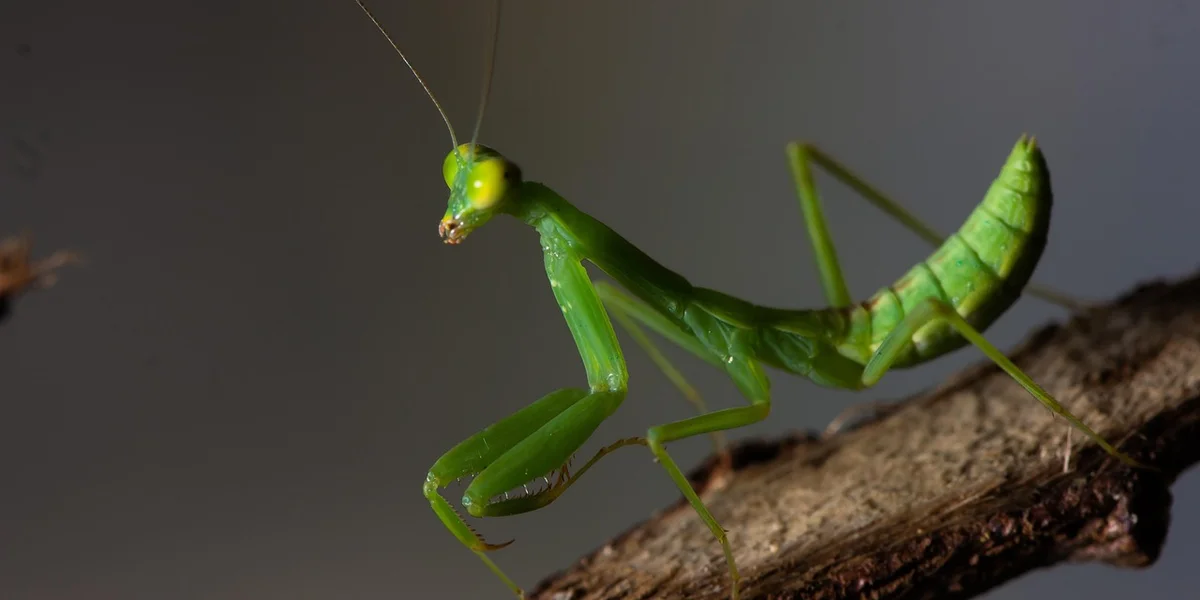
Many keepers notice that gentle UVB exposure can support smoother molting cycles in their mantises. Proper lighting helps regulate their internal clocks, which may reduce molting issues like stuck skin or incomplete sheds. For instance, our Ghost Mantis Luna molted with fewer complications when her terrarium had a soft UVB glow, as it seemed to cue her body for the delicate process. Without it, some mantises might molt less frequently or face more difficulties, especially in dim environments.
-
In well-lit enclosures, mantises often show brighter energy levels and stronger appetites. We’ve seen Moss, our Giant Asian Mantis, become more active and eager to hunt under consistent, low-level UVB, almost as if the light sparks his natural curiosity. This vitality isn’t just about visibility-it’s about mimicking the subtle rhythms of their wild habitats, where daylight signals feeding times and exploration. A dim or erratic light setup can leave mantises lethargic, so a steady source encourages their innate behaviors.
-
Let’s clear up a common myth: UVB isn’t essential for calcium metabolism in praying mantises. Unlike reptiles, mantises and other invertebrates don’t rely on UVB to synthesize vitamin D for calcium absorption; they get what they need directly from their prey. Overemphasizing UVB for calcium can lead to unnecessary setups, so focus on a balanced diet instead. We’ve found that providing gut-loaded insects like fruit flies or crickets covers their nutritional bases without extra lighting demands. Also, be mindful of live prey you feed; avoid prey that’s too large or treated with pesticides. Instead, choose appropriately sized, gut-loaded insects to keep them safe.
Setting Up UVB Lighting in Your Mantis Enclosure
-
Begin by assessing your terrarium’s dimensions and your mantis species’ natural needs. Smaller enclosures for species like Ghost Mantises do well with very low UVB intensity, while larger setups for active types might benefit from slightly more. Check online forums or care sheets to match lighting to your mantis’s origin-tropical species often adapt to gentle UVB, but it’s rarely a must-have.
-
Select low-output UVB bulbs, such as compact fluorescents, which emit minimal heat and safe radiation levels. Avoid high-heat options like mercury vapor bulbs, as they can quickly overheat the enclosure and stress your mantis. We’ve had good results with 5.0 UVB compact bulbs for our Orchid Mantis Sprig, providing a soft glow without drying out her habitat. Always opt for bulbs designed for small pets to prevent burns or dehydration.
-
Position the light safely above the enclosure, resting on a mesh lid or glass to diffuse intensity and prevent direct contact. Set a consistent photoperiod of 12 hours on and 12 off to mimic natural daylight cycles, which helps mantises maintain healthy sleep and activity patterns. For example, we use a simple timer for Moss’s light, ensuring it turns on at dawn and off at dusk, much like the gradual shifts in a forest clearing.
-
Monitor humidity and temperature closely during light cycles, as UVB setups can subtly alter the enclosure’s microclimate. Mist the terrarium lightly if humidity drops, and use a thermometer to keep temperatures between 20-25°C, avoiding spikes that might disrupt molting or feeding. In our experience, a quick check each morning ensures Luna’s home stays as humid and cozy as a dew-kissed leaf, even with the light on.
Alternatives to UVB Lighting for Indoor Mantis Care
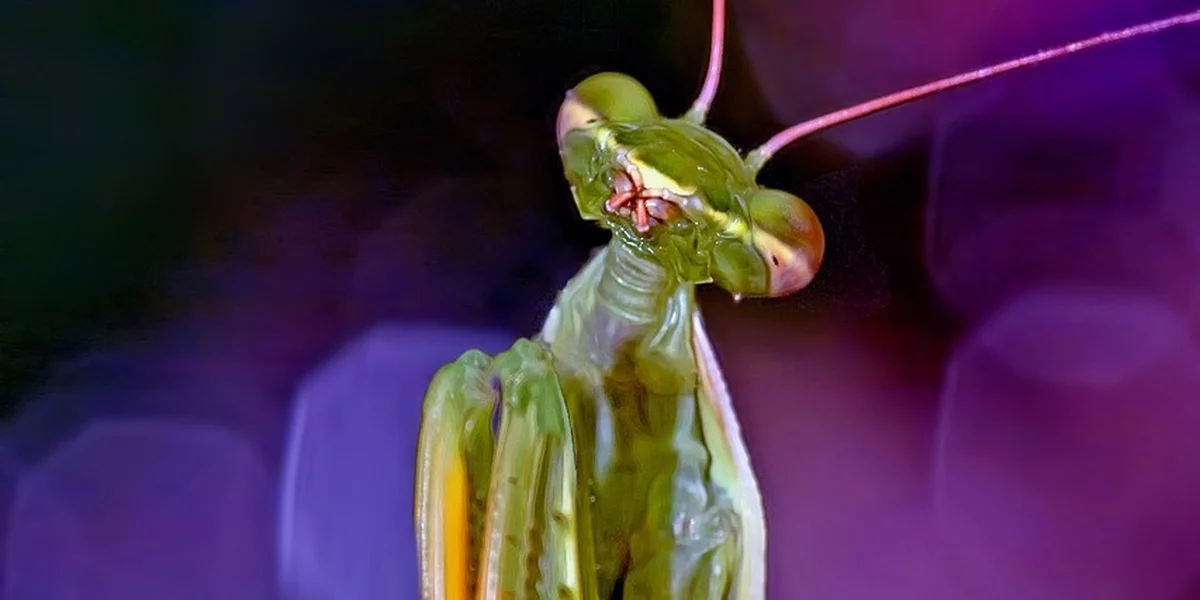
When UVB lighting isn’t part of your setup, you can still create a thriving environment for your mantis with simple, effective methods.
-
Using indirect natural sunlight through a window for brief periods offers a gentle, natural light source that many mantises enjoy. Position the enclosure so it catches soft, filtered light-like from an east-facing window in the morning-for no more than an hour to avoid overheating. We’ve noticed Luna, our Ghost Mantis, often tilts her head towards the window, her misty brown frills seeming to soak up the warm glow without any risk of harsh UV rays.
-
Full-spectrum indoor lights that mimic daylight provide a balanced spectrum for visibility and behavior without the dangers of UVB. These lights, such as LED grow bulbs, replicate the natural hues of sunlight and help your mantis feel alert and active. Just ensure they don’t emit excess heat; a cool, consistent light source keeps habitats safe and comfortable. In our experience, a simple full-spectrum lamp above Moss’s enclosure encourages his curious explorations without any stress.
-
Dietary adjustments, like gut-loaded feeders, ensure your mantis receives essential nutrients even without UVB exposure. By feeding insects like crickets or fruit flies a diet rich in carrots, leafy greens, or commercial gut-load formulas before offering them to your mantis, you boost their vitamin and mineral content. This approach supports overall health, from molting to energy levels. Sprig, our Orchid Mantis, always appears more vibrant after meals of well-fed prey, her pink and white petals seeming to shimmer with vitality. This concept is a cornerstone of the ultimate guide to gut-loading feeder insects for mantises. Mastering it lets you tailor prey nutrition to your mantis’s life stage and needs.
Common Myths and Practical Tips for Mantis Lighting
Clearing up confusion around mantis lighting can make care simpler and more enjoyable for both you and your pet.
-
Debunking the misconception that UVB is vital for all mantis species helps you avoid unnecessary setups and expenses. Most mantises, including common pets like the Chinese or European varieties, get all they need from their diet and ambient light. Wild mantises often live in shaded areas with minimal UVB, so indoor care can easily replicate this with proper feeding and simple lighting. We’ve raised healthy mantises for years without UVB, focusing instead on a balanced diet and stable environment.
-
Observing your mantis for signs of too much or too little light allows you to fine-tune their habitat for comfort. Watch for behaviors like excessive hiding, lethargy, or color changes-these can indicate stress from bright light. If your mantis seeks shade or avoids open areas, consider dimming the light or adding more cover. With Sprig, we adjust her lighting when she retreats to her favorite leaf, a quiet reminder that even subtle changes matter. Understanding behavioral signs of stress in mantids is crucial for their wellbeing.
-
Prioritizing a consistent light cycle over complex setups fosters a calm, predictable routine that mantises thrive on. Aim for a regular schedule, such as 12 hours of light and 12 hours of dark, to mimic natural day-night rhythms. You don’t need advanced timers or special bulbs; a basic lamp on a timer works wonders. This consistency reduces stress and supports natural behaviors, making care straightforward and effective.
Common Mantis Queries
What does UV-visible light refer to in praying mantis care?
UV-visible light encompasses the broader spectrum beyond UVB, including UVA and visible wavelengths that mantises use for enhanced vision and behavior. While not essential, some keepers note it can improve activity levels and natural hunting instincts in diurnal species.
How is UV-visible spectroscopy applied to praying mantis research?
UV-visible spectroscopy is a scientific method used in studies to analyze how mantises reflect or perceive light, but it has little practical use in home pet care. Most hobbyists can rely on observational tips from experienced keepers rather than technical data from these studies.
What does “praying mantis” mean in urban dictionary slang?
In urban slang, “praying mantis” might describe a person who is patient, stealthy, or predatory in behavior, but this has no bearing on actual mantis care. For pet owners, it’s simply the common name for these fascinating insects, with no special slang implications in husbandry. In terms of temperament, mantises aren’t typically “friendly” pets and don’t seek human interaction. Understanding their behavior comes from observing species-specific cues and respecting their boundaries rather than expecting affection.
Gentle Reminders for Your Mantis’s Well-Being
Praying mantises flourish without UVB lighting, drawing essential nutrients directly from their prey like fruit flies or crickets. Your focus is best placed on crafting a habitat with stable warmth, gentle misting, and nutritious live food to support their natural behaviors. To create a naturalistic, safe habitat for your praying mantis, add live plants, branches, and secure hides to mimic the wild. A thoughtful setup promotes calm, natural hunting, and healthy molting.
We invite you to stay curious and keep exploring trustworthy care guides and community insights as your mantis grows. By observing your pet closely and adjusting care with patience, you’ll build a rewarding connection that helps your mantis thrive in your home. For more tips on handling and understanding behavior, check out our complete guide to caring for a pet praying mantis.
Further Reading & Sources
- r/mantids on Reddit: lighting for a praying mantis
- How To Care For A Praying Mantis: Complete Guide – AquaWorldHub
- Buy Praying Mantis Setup Online
- Preying Mantis Setups | Starter Kits For Your Mantid
Rowan Hale is a lifelong insect enthusiast who fell in love with mantises for their calm presence, alien elegance, and surprising personalities. After years of keeping and raising a variety of species, Rowan shares practical tips, creative insights, and real-world experience to help others enjoy the quiet magic of mantis care. From setting up the perfect enclosure to understanding their subtle behaviors, Rowan invites readers into a gentle, curious world where every tiny movement feels like a discovery.
Habitat Products